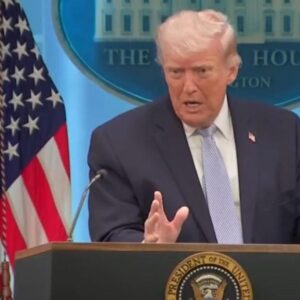
Trump Authorizes 25 % Tariffs Against Countries Buying Goods or Services from the Iranian Regime

President Donald Trump signed an executive order authorizing the imposition of tariffs of up to 25% on countries that maintain commercial relations with Iran, whether through the purchase of goods or the contracting of services. The decision, confirmed by the White House, strengthens the economic pressure policy on Tehran and marks a new chapter in the U.S. strategy to contain a regime considered hostile.
The order does not immediately activate the tariff but establishes the legal framework necessary for its implementation. The Department of Commerce, in coordination with the Department of State and other federal agencies, will determine which countries are affected and under what conditions the sanctions will apply. This gives the Executive Branch a wide margin of maneuver to act selectively and proportionally.
From Washington, officials emphasize that the measure responds to national security concerns. The Trump administration maintains that Iran continues to carry out destabilizing activities, funds radical groups, and openly challenges international agreements. In this context, the White House considers traditional sanctions insufficient and favors mechanisms that effectively limit the Iranian regime’s economic capacity.
Unlike previous decisions, this order introduces a key element: direct pressure on third-party countries. Rather than punishing Iran alone, the United States warns its trading partners that doing business with Tehran may come at a high cost. The message is clear: those who choose to trade with the Iranian regime will face consequences in their relationship with the U.S. market.
Economies such as China, India, and Turkey, which maintain commercial ties with Iran, are now closely watching Washington’s next moves. For many of these countries, access to the U.S. market is strategic, which could force them to reconsider current agreements and contracts if the tariffs are applied.
Economic analysts warn that the measure could generate additional tensions in international trade, especially in sensitive sectors such as energy and heavy industry. There is also the risk of retaliation or trade disputes. However, the Trump administration argues that stability and security cannot be subordinated to a global trade system without clear rules or accountability.
On the domestic front, the decision reinforces President Donald Trump’s message on economic sovereignty and the defense of national interests. After decades of policies prioritizing globalist consensus, the White House is using America’s economic weight as a tool for deterrence and international order.
For Hispanic America, the direct impact will be limited due to the region’s low trade with Iran. Nevertheless, indirect consequences could be felt if major trading partners are forced to adjust their economic relationships, affecting supply chains and the stability of certain regional markets.
As usual, the international left has reacted with criticism, denouncing an alleged excessive hardening and appealing to old formulas of unconditional dialogue.
However, experience shows that this approach, far from strengthening rights or institutions, often results in disorder, lack of control, and increasing exposure of families and social stability. They promise balance but leave authority gaps that citizens ultimately pay for.
Gateway Hispanic will continue reporting rigorously, defending order, law, family, and the institutions that sustain free societies.
READ MORE:
Stay informed with the most important news and reliable analysis!
Subscribe to our newsletter: https://gatewayhispanic.com/sl-newsletter
About The Author