A citizen-funded documentary highlights the largest cross in Christendom and sparks historical and political debate in Spain
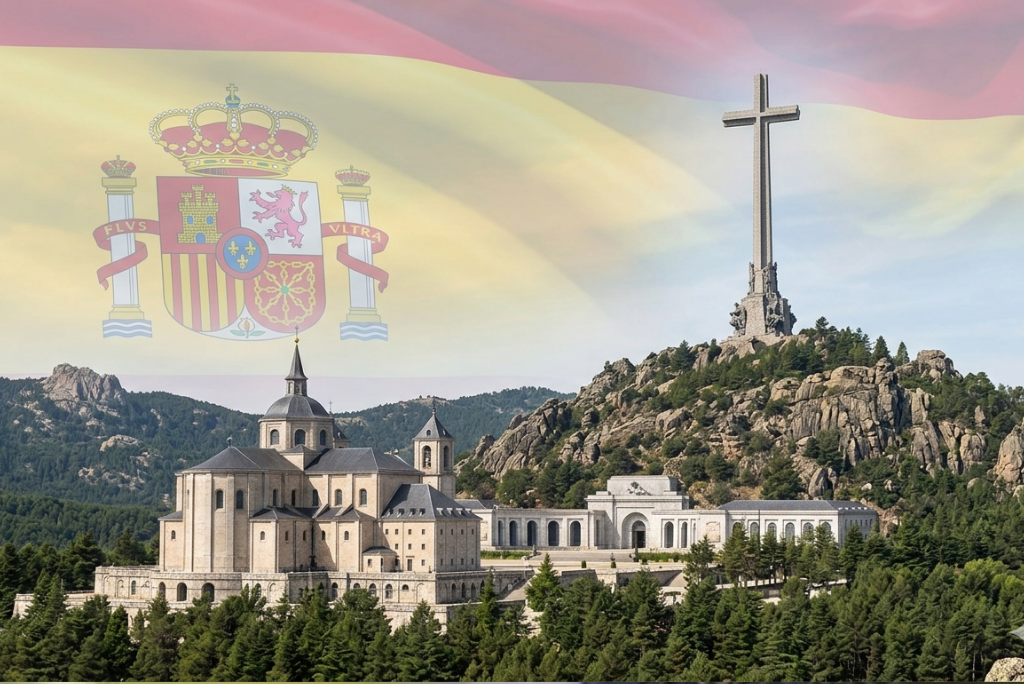
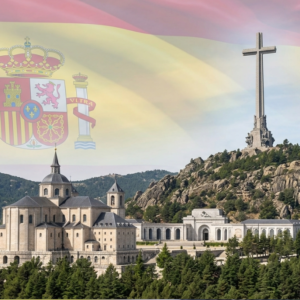
In the heart of Spain stands one of the most impressive monuments in the world: the largest cross in Christendom, located in the monumental complex of Valle de Cuelgamuros (formerly known as the Valley of the Fallen). It is not merely a colossal architectural work, but a symbol charged with religious, historical, and cultural meaning.
A recent documentary, funded through popular contributions, aims to explain its origins, defend its value, and warn about what many see as an attempt to erase part of history.
A unique monument in the world
The cross at the Valle de Cuelgamuros is recognized as the largest in the world (Guinness World Records). It reaches a height of 152.4 meters (including its base), with arms measuring 24 meters each, and is visible from tens of kilometers away.
It was built between 1940 and 1958 in the post–Spanish Civil War period, as part of a complex that includes a basilica carved into the rock (262 meters long, the longest underground basilica in the world) and a Benedictine abbey. The project was promoted by the regime of Francisco Franco, with the official aim of commemorating those who died in the Civil War.
Beyond its historical origins, the cross represents for millions of Christians the central symbol of their faith: sacrifice, redemption, and hope. In Christian tradition, it symbolizes Christ’s victory over death and sin.
A symbol between faith and history
Over the centuries, the cross has transcended religion to become a key element of Europe’s cultural identity.
The documentary emphasizes this dimension: the cross of Cuelgamuros cannot be understood solely within the political context in which it was built, but also as a symbol connected to the universal Christian tradition.
🔗 Watch here:
The controversy: memory, politics, and “re-signification”
Today, this monument is also one of the most controversial in Spain for several reasons. Historians point out that the complex was conceived as a symbol of victory for the Francoist side and that its construction involved the use of political prisoners’ labor. This interpretation has led different governments to promote processes of “re-signification.”
In March 2025, Cardinal José Cobo signed an agreement with the Spanish Government (represented by Minister Félix Bolaños) which, according to its supporters, aimed to “preserve what is essential.”
However, this agreement has sparked strong controversy. Critics, such as Fundación Abogados Cristianos (which filed an appeal before the National Court), argue that the cardinal lacked the authority to sign it, as it concerns a Pontifical Basilica whose sacred nature can only be modified with explicit intervention from the Holy See.
The agreement drastically reduces the space reserved for worship to the altar and nearby seating, leaving the rest of the basilica (central nave, dome, and access areas) open to a process of political and ideological reinterpretation. This has raised concerns about whether the sacred nature of the temple is truly being preserved.
Recent evidence: the people’s response
Far from being a “stagnant” place, during Good Friday and Holy Week 2026, the Valley was filled with families who took part in the Stations of the Cross and attended services, filling the basilica to capacity.
These events demonstrate the real attachment of the faithful. As noted in a commentary by InfoVaticana, “the thirst of Spanish faithful emerges in places like the Valley of the Fallen, and their thirst for truth cannot be quenched with stagnant water.”
Many believers regularly raise this issue with Cardinal Cobo during parish visits, expressing concern about preserving a church free from desecration.
An attempt to erase history?
For those who defend the cross, the issue is not only political—it is also cultural and spiritual. Modifying or removing this monument would mean:
• Erasing part of Spain’s history
• Breaking with a fundamental symbol of Christianity
• Setting a dangerous precedent in the management of heritage
The documentary captures these concerns and raises a key question:
Can a society move forward if it removes the symbols that are part of its history—even those that generate debate?
A documentary born from the people
One of the most remarkable aspects of this project is its grassroots origin: funded by ordinary citizens, without major production companies or institutional backing.
Watch and share the documentary
You can watch the full documentary here:
The Largest Cross in Christendom – Full Documentary
https://x.com/cakealatake/status/2042841783206334471?s=46&t=wGbWasDRpWifmw-N-47Wgg
History, memory, and heritage
Beyond ideological positions, this documentary—and the debate sparked by the Cobo-Government agreement—invites reflection on the relationship between history, memory, and heritage.
Sharing it is not just about spreading a video; it is about participating in a debate that touches on identity, culture, and the freedom to interpret the past.
In the end, the question remains:
Is defending a monument defending an ideology… or preserving history and responding to the spiritual thirst of a people?
About The Author