In international politics, a single week can reveal what years of diplomacy try to conceal. What happened between April 7 and April 15 in the Strait of Hormuz left us with a clear picture of how power truly operates in today’s global order.
On April 7, China and Russia vetoed a draft resolution in the United Nations Security Council that called for guarantees of free navigation and international oversight in the Strait of Hormuz. From a diplomatic standpoint, both countries justified their veto by arguing that the text was “imbalanced” and could open the door to foreign intervention in a sensitive regional corridor.
However, beyond the language of sovereignty, this decision effectively blocked a Western-backed attempt to formalize international control over one of the world’s most critical energy routes.
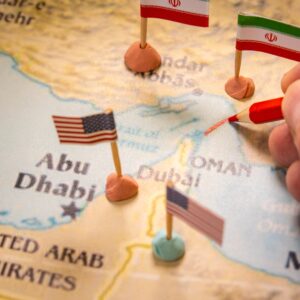
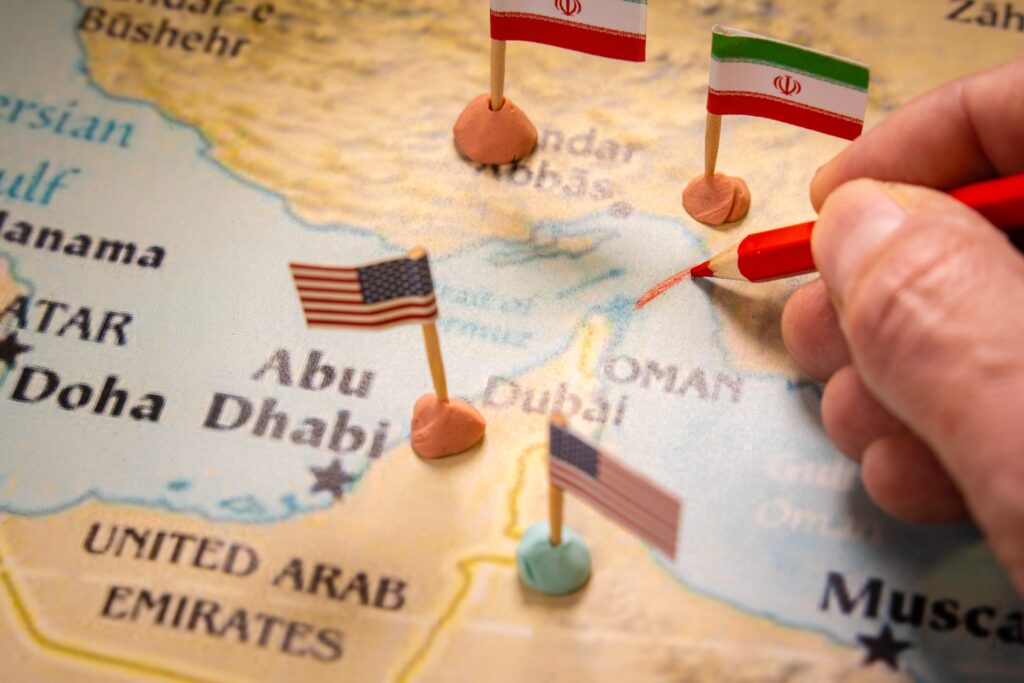
A few days later, on April 13, the United States escalated its posture. The U.S. Navy increased its presence in the Gulf and surrounding areas, deploying additional destroyers equipped with missile defense systems, reinforcing carrier strike groups, and intensifying aerial surveillance operations over maritime routes.
Although it has not been officially labeled a “blockade,” the operational reality amounts to a controlled maritime security perimeter, allowing selective transit while demonstrating full capability to restrict it if necessary.
This was a calculated demonstration of control over a strategic chokepoint.
The following day, China abruptly shifted its tone. Its Ministry of Foreign Affairs issued a statement calling for the “immediate restoration of stability and the full reopening of navigation routes” in the Strait of Hormuz, emphasizing the need to protect global energy supply chains.
According to various sources, state-linked Chinese maritime insurers began reassessing their exposure to risk in the region, reflecting growing concern over potential disruptions in oil flows essential to its economy.
Once again, this was a strategic recalibration under pressure.
Geopolitics Without Illusions
What happened in Hormuz dismantles a persistent myth: that great powers act according to principles. In reality, they act according to shifting interests, measured in real time.
The initial veto by China and Russia was a geopolitical counterweight to Western influence. But when the United States demonstrated its ability to physically shape the situation—at sea—the cost-benefit equation changed.
The situation became an immediate economic risk.
Hormuz: Where the World Passes Through
The Strait of Hormuz is not just another maritime corridor. Approximately one-fifth of the world’s oil passes through it every day, along with a significant portion of liquefied natural gas exports.
Even a partial disruption produces immediate effects:
- Volatility in energy prices
- Rising maritime insurance costs
- Reassessment of strategic reserves by major economies
That is why every move in Hormuz carries global consequences.
The Logic of Power
The pattern was clear:
- Diplomatic blockage to halt or shape international frameworks
- Military positioning to establish facts on the ground
- Narrative adjustment to protect strategic and economic interests
China showed that it adapts quickly when its energy security is at stake. The United States set boundaries through controlled escalation. And Russia reinforced its opposition to Western-led mechanisms while avoiding direct exposure.
Contained Tension and Strategic Uncertainty
As of April 15, the situation remains volatile but contained:
- U.S. naval forces maintain a high operational presence, with continuous patrols and surveillance missions
- No formal closure of the strait has been declared, but transit conditions remain highly sensitive
- China has intensified its diplomatic messaging focused on stability and trade continuity
- Russia has reiterated its calls for non-interference, maintaining its support for the veto position
Global markets are reacting cautiously, incorporating geopolitical risk premiums into the energy sector, though without triggering widespread panic.
Beyond Hormuz
What we are witnessing in these days is how the global order functions under pressure—and it raises important questions:
What is the real role of the United Nations in shaping outcomes?
Are we entering a phase where power projection defines reality faster than diplomacy can respond?
About The Author