In recent days, a phenomenon has emerged that has surprised both international observers and ordinary citizens: demonstrations organized by supporters of Chavismo demanding the immediate release of Nicolás Maduro and his wife, Cilia Flores, following the former leader’s capture by the United States.
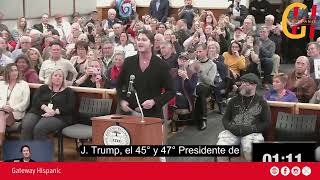
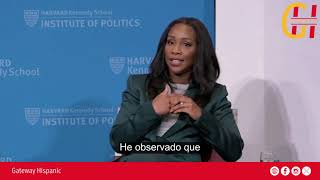
Among those voicing this demand is a woman, easily identifiable by her green hair, who spoke in English at a public event, declaring: “Free Maduro. The world cries out for Venezuela… restore international law.” When asked by a journalist, “Why are you here today?”, she replied that her presence was motivated by her support for Maduro and what she considers an injustice carried out by U.S. action.
However, this stance has triggered a strong critical reaction, particularly from sectors that support Maduro’s capture and back the actions led by President Donald Trump and Secretary of State Marco Rubio. For many critics, it is not only shocking that after decades of dictatorship, repression, and economic collapse in Venezuela there are still defenders calling for Maduro’s release, but that these voices represent an alarming disconnect from the reality experienced by the Venezuelan people.
Maduro’s capture, which included a military operation in Caracas overseen by the United States, was celebrated internationally by those who see the end of his regime as an opportunity to restore democracy, freedom, and the rule of law in Venezuela. Thousands of Venezuelans inside and outside the country welcomed the fall of the dictator and demanded the end of his authoritarian government, pointing to decades of human rights abuses, persecution of political opponents, and the destruction of the national economy.
By contrast, calls for his release made by pro-Maduro activists are widely viewed as a desperate attempt to perpetuate the Chavista narrative and to rewrite the history of suffering endured by Venezuela under his rule. In a context where international and regional justice systems have consistently pointed to violations committed by the Venezuelan regime, demanding his release—as if he were a political prisoner—appears to critics not only misguided, but morally untenable.
Moreover, these regime-aligned demonstrations have been used by officialist leaders to attack the United States and question the legitimacy of its intervention, further intensifying the already deep polarization surrounding Venezuela’s future and global perceptions of its political and humanitarian crisis.
The presence of voices calling for Maduro’s release, even after years of documented harm to the Venezuelan people, underscores the depth of the ideological divide surrounding the dictator’s figure and opens a broader debate about the responsibility of those who continue to defend authoritarian leaders despite their devastating consequences.