Abr. 19, 2026 12:52 am

Trump Announces Debt Reduction and Dividends for the People: “We Have More Money Coming In Than Ever Before”

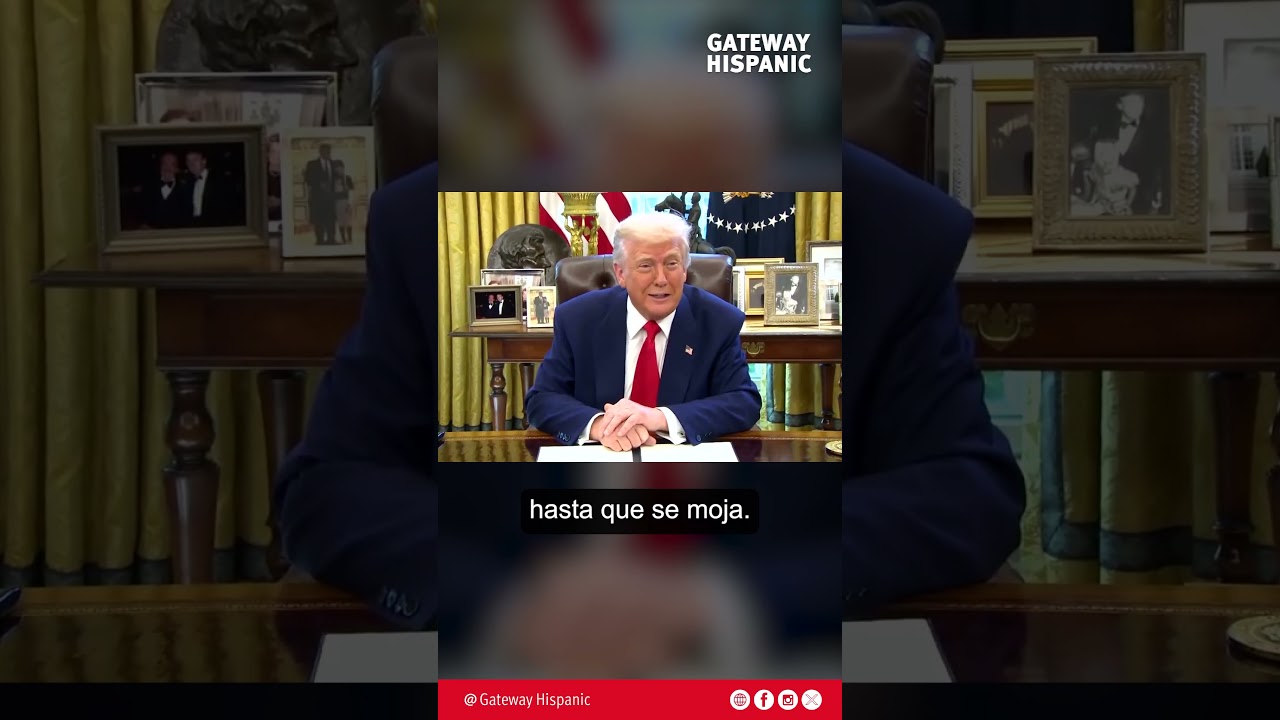
President Donald J. Trump recently reaffirmed his commitment to America’s economic recovery, highlighting a historic surge in federal revenue and outlining two central goals for this new phase of government: reducing the national debt and considering an economic dividend for the middle and working class.

“We’re going to pay down the debt. We have a lot of money coming in—more money than the country has ever seen, hundreds of billions of dollars,” the President stated. “And there could be a distribution or a dividend for the people of our country. I’d say we could do a dividend for middle-income and lower-income Americans.”

These remarks mark a pivotal moment in the new economic direction his administration is driving: a vision of prosperity not merely reflected in macroeconomic data, but in real, tangible benefits for everyday citizens.

A Clear Path: Less Debt, More Justice for Taxpayers

For President Trump, this surge in revenue must not be funneled into more bureaucracy or government expansion. On the contrary, the central objective is to reduce the national debt—a burden that has spiraled out of control for decades under administrations of both parties, particularly under the previous one, known for its fiscal disorder and inflationary policies.

The President emphasized that with record-level revenue, the country now has the opportunity to do what others failed to do: meet its financial obligations and return part of that wealth to the American people. His proposed dividend is aimed directly at low- and middle-income families—the true drivers of the U.S. economy, long neglected by political elites.

Far from being a welfare or government-dependent approach, Trump is advancing an economic model where working-class Americans benefit directly from national growth, not through handouts or politicized subsidies, but through sound financial policy. In this context, the proposed dividend is not an ideological expense—it’s an extraordinary measure made possible by successful leadership.

The Legacy of Tariffs

Trump reminded the public that this vision isn’t new. In his first term, his administration launched a strategic tariff policy, particularly against China, which generated hundreds of billions of dollars in revenue for the United States.

“This should’ve been done many years ago,” he said. “And I did it in my first term with China. We couldn’t finish the rest because COVID hit. And you couldn’t really go to France, Spain, or Italy and say, ‘Let’s start talking about some tariffs.’”

With clarity, Trump pointed to the global pandemic as the interruption to his initial economic offensive. Still, he laid the foundation for a model he is now resuming with even more determination. In the meantime, he was direct about the role of his immediate successor: “And then Biden ruined everything. Everything he touched, he ruined.”

The President’s words reflect the sentiment of millions of Americans who, between 2021 and 2024, watched the country descend into economic uncertainty, out-of-control inflation, and declining global competitiveness. Today, under new leadership, the White House is once again guided by common sense, strategic strength, and a clear priority for the people.

Dividends for the People, Not the Bureaucracy

The concept of public dividends is not common in U.S. politics, but under President Trump’s administration, it takes on a new and practical dimension aligned with his conservative philosophy: when there is a surplus, it shouldn’t stay in Washington. It should go back to the people—especially to those who sustain the economy through their homes, small businesses, and daily labor.

This is not a government expansion plan. It’s a concrete action born from a strong economy, from leadership that negotiates firmly abroad, from efficient national resource management, and from a deep belief that economic success must be felt in citizens’ everyday lives.

Trump is not proposing more government. He is proposing better government—one that knows when to act, when to step back, and how to empower its citizens instead of burdening them with more regulations and dependency. His approach is about returning money to taxpayers and paying down the debts other governments ignored or irresponsibly increased.

Conclusion: A Strong Economy, Responsible Governance, and a Nation That Benefits

President Donald Trump’s recent statements confirm that his second term is defined by a clear and patriotic vision: restoring the country’s financial strength, protecting the interests of the American citizen, and ensuring that the wealth generated by the nation does not get lost in bureaucracy, but rather reaches those who have earned it.

While the previous administration led the country into deficit and confusion, today America is once again talking about budget surpluses, reduced debt, and real benefits for the working class. This shift is no accident—it’s the result of an administration rooted in international firmness, fair trade, national production, and fiscal responsibility.

If the dividend proposal is implemented, the United States will set a historic precedent where national growth is no longer captured by elites, but shared with those who have believed in, worked for, and sustained the country—even in its most difficult times.

Once again, President Trump proves that his commitment is not to the lobbyists or the bureaucrats—but to the American people. And he backs it up with results, not empty speeches.


You may also like

If you don't like your job, remember that there is someone who has it harder  While others complain about their jobs, a woman sweeps a cliffside to earn a living and keep it attractive for tourism  In a world where many people are frustrated with their daily routines, there are those who carry out truly extreme jobs with humility, courage, and determination. Such is the case of a woman who, far from air-conditioned desks and urban labor benefits, risks her physical safety every day sweeping a cliffside. Her goal: to keep it clean and appealing for the visitors and tourists who come seeking a breathtaking view.  The image is striking. This woman, with a simple broom and no sophisticated safety gear, sweeps loose soil and natural debris that wind and rain deposit at the cliff’s edge. There are no railings. No protection systems. Just the abyss, the broom, her sense of duty, and an iron will that speaks louder than any modern complaint.  These types of scenes remind us of an uncomfortable but necessary truth: while many workers in the Western world fight against the “oppression” of coffee machines, AC, and flexible hours, others literally risk their lives just to survive. This woman doesn’t sweep just for cleanliness; she sweeps for dignity, for responsibility, and for the need to feed her family.  The system that allows jobs like this, without proper conditions or recognition, is the same one many progressives prefer to ignore. Instead of focusing on improving these realities with common sense and hard work, much of the global elite prefers to push ideology, promote subsidies, victim narratives, and empty speeches that do nothing for the real working class.  The radical left talks about social justice, but rarely highlights people like this woman. Where are the NGOs? Where is the mainstream media? Where is the outrage from celebrities who scream about climate change but say nothing about the labor conditions of those who actually work with the land?  A healthy society must once again value real effort, hard work, and individual responsibility. This woman doesn’t need a virtual applause — she needs real opportunities: local development, productive investment, and a free economy that allows citizens to prosper without depending on crumbs from the state.  It’s time to stop glorifying the resentment of those who have everything and still feel like victims, and start recognizing the bravery of those who have nothing but give it their all. The next time someone complains about their job from an ergonomic chair, they should remember this image: a woman sweeping a cliffside so that others can enjoy the view.  #DignifiedWork #RealEffort #MeritNotSubsidy #WorkEthic #RealConservatism #NewsThatMatters
If you don’t like your job, remember that there is someone who has it harder While others complain about their jobs, a woman sweeps a cliffside to earn a living and keep it attractive for tourism In a world where many people are frustrated with their daily routines, there are those who carry out truly extreme jobs with humility, courage, and determination. Such is the case of a woman who, far from air-conditioned desks and urban labor benefits, risks her physical safety every day sweeping a cliffside. Her goal: to keep it clean and appealing for the visitors and tourists who come seeking a breathtaking view. The image is striking. This woman, with a simple broom and no sophisticated safety gear, sweeps loose soil and natural debris that wind and rain deposit at the cliff’s edge. There are no railings. No protection systems. Just the abyss, the broom, her sense of duty, and an iron will that speaks louder than any modern complaint. These types of scenes remind us of an uncomfortable but necessary truth: while many workers in the Western world fight against the “oppression” of coffee machines, AC, and flexible hours, others literally risk their lives just to survive. This woman doesn’t sweep just for cleanliness; she sweeps for dignity, for responsibility, and for the need to feed her family. The system that allows jobs like this, without proper conditions or recognition, is the same one many progressives prefer to ignore. Instead of focusing on improving these realities with common sense and hard work, much of the global elite prefers to push ideology, promote subsidies, victim narratives, and empty speeches that do nothing for the real working class. The radical left talks about social justice, but rarely highlights people like this woman. Where are the NGOs? Where is the mainstream media? Where is the outrage from celebrities who scream about climate change but say nothing about the labor conditions of those who actually work with the land? A healthy society must once again value real effort, hard work, and individual responsibility. This woman doesn’t need a virtual applause — she needs real opportunities: local development, productive investment, and a free economy that allows citizens to prosper without depending on crumbs from the state. It’s time to stop glorifying the resentment of those who have everything and still feel like victims, and start recognizing the bravery of those who have nothing but give it their all. The next time someone complains about their job from an ergonomic chair, they should remember this image: a woman sweeping a cliffside so that others can enjoy the view. #DignifiedWork #RealEffort #MeritNotSubsidy #WorkEthic #RealConservatism #NewsThatMatters
140views
Page 286 of 444