BREAKING NEWS: Claudia Sheinbaum and Trump Agree to Stop All Immigration in Mexico: A New Era in Bilateral Relations

The recent call between Claudia Sheinbaum, President of Mexico, and U.S. President-elect Donald Trump has caused a political and international stir. During their conversation, both leaders agreed to implement drastic measures to halt migration through Mexican territory and combat drug trafficking into the United States.
The Agreement
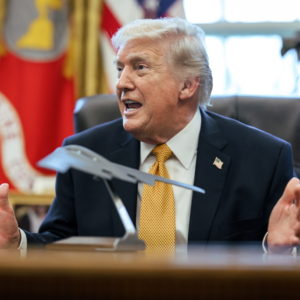
Trump stated that this dialogue would mark a significant shift in the relationship between the two countries, declaring:
«Indeed, we are closing our southern border.»

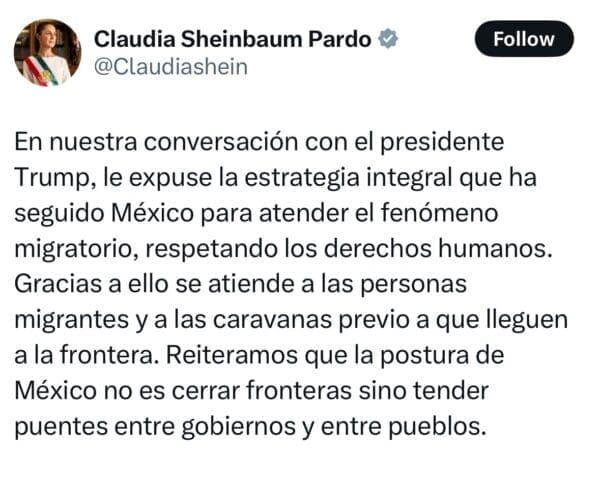
Claudia Sheinbaum later issued a statement on X denying that an agreement had been reached, further fueling uncertainty about the progress of the talks. While there appears to be a shared commitment to addressing illegal immigration, critics have accused Sheinbaum of not wanting to face the cartels, casting doubt on her ability to implement effective measures. The drug cartels, which dominate much of the illegal immigration network in Mexico, remain a significant obstacle to any meaningful solution.
In addition, the leaders discussed the need to address the issue of drug trafficking from both fronts: controlling the flow of drugs into the U.S. and reducing domestic consumption, as the U.S. remains one of the largest drug markets in the world.
Tariff Pressure and Reactions
The agreement comes amid ongoing economic tensions. Just 48 hours before this conversation, Trump threatened to impose tariffs on Mexico unless more severe measures were taken against migration and drug trafficking. This type of economic pressure has been a recurring tool for the former president in past negotiations with Mexico.
However, the implications of this agreement go beyond the economic realm. Various human rights groups have condemned Sheinbaum’s decision, warning of the risks faced by migrants who could be stranded in Mexico or forced to take more dangerous routes.
Criticism and Support
Analysts have pointed out that the shift in Mexico’s immigration policy reflects an attempt to maintain favorable relations with the incoming Trump administration, although this could test Sheinbaum’s leadership on the international stage.
On the other hand, conservative sectors in the U.S. celebrated the measure as a win for border security and immigration control—two key priorities of the new administration.
Regional Impact
This agreement not only affects Mexico and the U.S., but also Central American countries whose citizens rely on migration routes to the north. International organizations warn that this policy could exacerbate the humanitarian crisis in the region.
Next Steps
Details of the agreement are expected to be finalized in the coming days, potentially focusing on economic incentives and security cooperation. However, questions about its implementation, political cost, and humanitarian implications remain unresolved.
Today, doctors Raúl Tortolero and María Herrera Mellado, the latter an immigration attorney in the U.S. and political analyst, discussed the situation:
The call between Sheinbaum and Trump marks a pivotal moment in Mexico-U.S. relations. While the agreement could strengthen border security, it raises serious challenges in terms of human rights and regional stability. It will be crucial to watch how these policies develop and how national and international actors respond in the coming months.
About The Author