May. 5, 2026 2:49 pm
fotos-pagina-web-gh-39
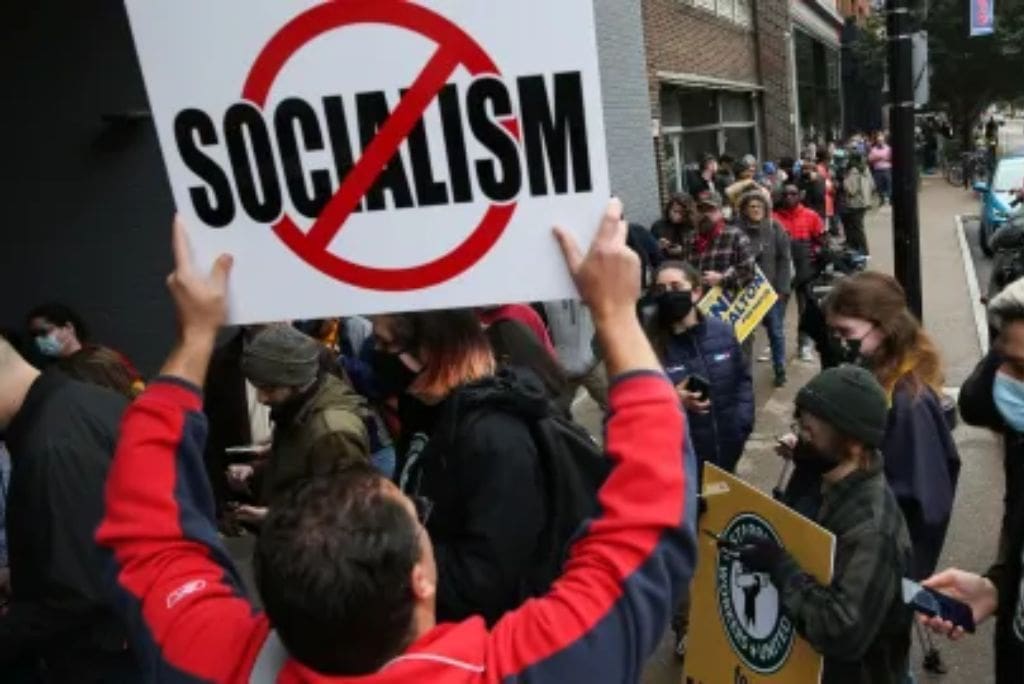
For some time now, we’ve been hearing a repetitive refrain, not necessarily from the left, that claims «Hispanics are predisposed to socialism,» and therefore to misery, directly blaming Catholicism, which is inherent to our tradition.

According to this view, it’s something we supposedly carry in our blood, which means we are doomed to never progress.

Those who utter such inaccuracies filled with crude lies often do so with a supposed sense of superiority that serves to cover up their ignorance or sectarianism, not knowing which is worse.

When it comes to religious persecution, the suffering of Irish Catholics (whose blood and culture heavily influenced the United States) at the hands of the English is often conveniently omitted.

Just as many Irish found refuge in the United States, centuries earlier, they found it throughout Spain, both in Europe and in America:

But sectarianism and manipulation aside, the truth is that Hispanics are not predisposed to socialism, nor do we have a historical or cultural tendency toward it. Not even religiously.

In fact, socialism ideologically originated in Europe, with its roots spread from France to Germany, and with abundant contributions from England, until it was crystallized by the German Karl Marx and exploded with the Russian Revolution.

Neither Robert Owen, nor Henri de Saint-Simon, nor Ferdinand Lasalle, nor Friedrich Engels, nor Karl Marx, nor Lenin, nor Trotsky, nor many other theorists of socialist variants were Hispanics.

Europe was the first to suffer from socialism, and let’s remember that the wall wasn’t in Buenos Aires or Lima, but in Berlin.

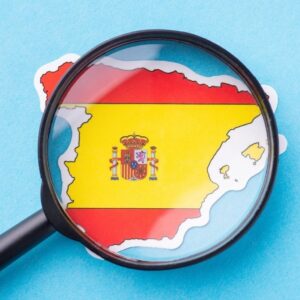
Within Europe, it was Spain that defeated communism, beyond the considerations that could be made, whether more or less ulterior. Because part of the Spanish Civil War (1936-1939) was fought to prevent the country from becoming a colony of Stalin.

When Fidel Castro inaugurated his terrible dictatorship in Cuba, communism had already been oppressing the Old World for decades.


In fact, it’s the opposite of what some sectors would like: the truth is that socialism took a long time to arrive in the Hispanic world, and it always met with resistance.

Not even the “new left,” as exposed by Argentine thinkers Agustín Laje and Nicolás Márquez [link to book], [link to video], is “originally Hispanic” or exclusive to the Hispanic world, since such subversive ideas traveled from Central and Northern Europe to more northern parts of America.

Neither May 1968 nor Woodstock belong to the Hispanic world, either.

Socialism took a long time to settle in Hispanic America, and it did so through various mutations and by brute force (literally), often with allies such as drug trafficking.

But memory is short, and we don’t want to remember that when communist tanks were crushing Budapest and Prague, there were still Europeans emigrating to America to escape that hell.

By the way, recalling the heroic struggle of the brave Hungarian people in 1956 against Soviet tanks, Spain was the only Western country that genuinely offered aid, while other Western nations did absolutely nothing to stop communist expansion.

That said, it’s not that we want to deny the seriousness of the São Paulo Forum, the Puebla Group, and other threats that oppress Ibero-America and have already penetrated the United States. But to engage in the cultural battle with full rights, we cannot and should not fall for lies or propaganda that goes against a population that loves traditional values and is potentially conservative, as demonstrated in recent U.S. elections.

As the great writer Gilbert K. Chesterton, an English Catholic, once said: «In many respects, Spain has historically been the opposite of what many northerners assume. Spain has been a champion of progress and freedom. The very institution of Parliament, which liberal parliamentarians hold so dear, did not come from Simon de Montfort or the Magna Carta, but from Spain.»

And when we say «Spain,» by extension, it also applies to the broader Hispanic world.

Let’s not fall into clichés or stereotypes that work against us for no reason. Let’s understand and love our legacy, and in doing so, we will walk better and more united toward the future.

About The Author