BREAKING NEWS: Trump Warns Hamas That “We Will Have No Choice But to Go In and Kill Them” if Gaza Killings Continue
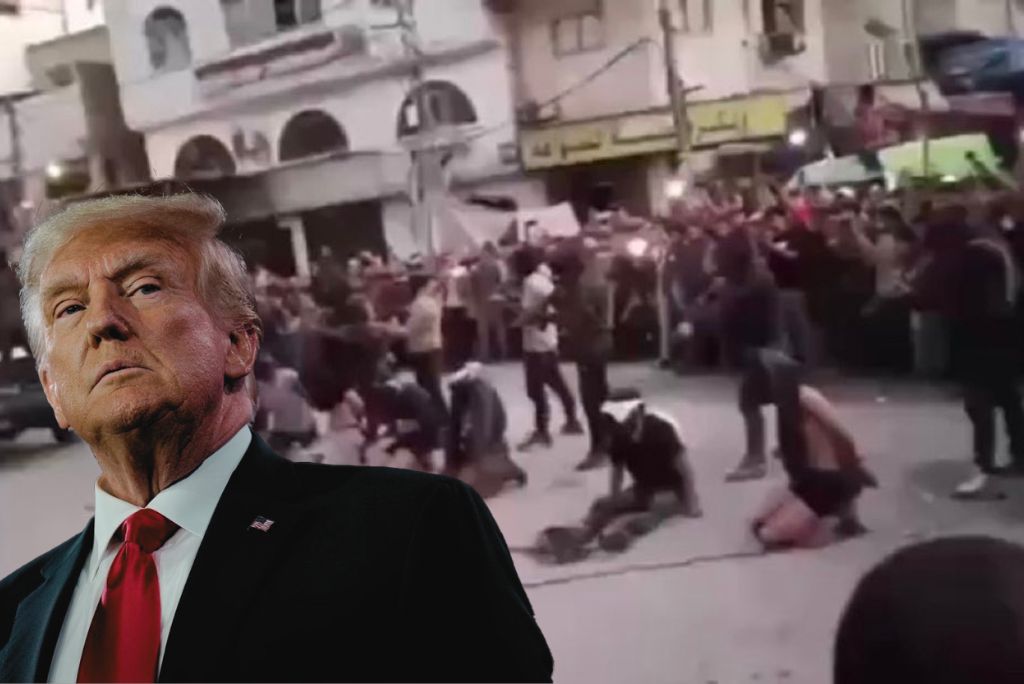
President Donald Trump issued a public and emphatic warning to Hamas on Thursday: “We will have no choice but to go in and kill them,” he wrote and defended on his social media accounts, in response to ongoing episodes of internal violence in the Gaza Strip following the recent ceasefire and hostage agreement.
The statement, literal and unambiguous, reaffirms the zero-tolerance policy the White House adopts against any action that endangers civilians, disrupts public order, or undermines the already fragile humanitarian process.
The facts are clear and concerning: Trump’s warning comes after reports of executions and clashes between factions within Gaza—including criminal groups and rival militias—that have taken advantage of the power vacuum in several war-devastated areas.
The president insisted that Hamas “must disarm” and warned that if it does not, Washington could promote or support rapid and decisive actions to restore security. The White House has not yet detailed the precise mechanisms by which it intends to carry out this threat.
The warning comes amid a conflict that has already lasted two years and produced staggering numbers: according to reports from the UN humanitarian team and the Gaza Ministry of Health, between October 7, 2023, and October 7, 2025, approximately 67,173 Palestinians were killed, with tens of thousands more injured.
The figures include a high proportion of civilians and minors, highlighting the magnitude of the humanitarian crisis.
At the same time, recent exchanges of hostages and bodies—including the return of Israeli remains and the release of Palestinian prisoners under the agreement—have been irregular and have further strained the political climate.
The presidential statement has practical consequences: it strengthens the Washington-Israel security alliance and applies diplomatic pressure on actors who normalize or downplay internal violence and terrorism.
From a conservative perspective, defending order and legitimate authority—including the ability of states to enforce the law and protect families and institutions—is essential for any lasting solution to the crisis.
Inability or reluctance to punish those committing crimes in conflict zones worsens suffering, erodes trust in institutions, and facilitates the criminal exploitation of humanitarian aid.
The ceasefire and hostage exchange agreement that went into effect last week included precise clauses on the return of bodies and prisoner swaps; however, both sides have accused each other of violations and of manipulating humanitarian mechanisms.
Israel, for its part, insists it will not relent in demanding compliance with the agreement and maintains pressure on Hamas to be accountable for internal security in Gaza.
Against this backdrop, the reaction of broad sectors of the international left—who downplay the terrorist threat or demand concessions without security guarantees—reveals a dangerous disconnect from reality: the defense of human rights cannot become an excuse to tolerate armed gangs or undermine legitimate authority.
The safety of families, the restoration of order, and the protection of democratic institutions must prevail over indulgent rhetoric. Asking for moderation without demanding verifiable results or real oversight mechanisms is, in practice, endorsing impunity and prolonging suffering.
Decisive action—not complacency—is the only honest path to restore peace and defend the traditional social fabric that sustains nations.
Read more:
About The Author