Jammers used in up to 85% of cargo thefts in Mexico: GPS-blocking devices expose systemic weaknesses in transport security
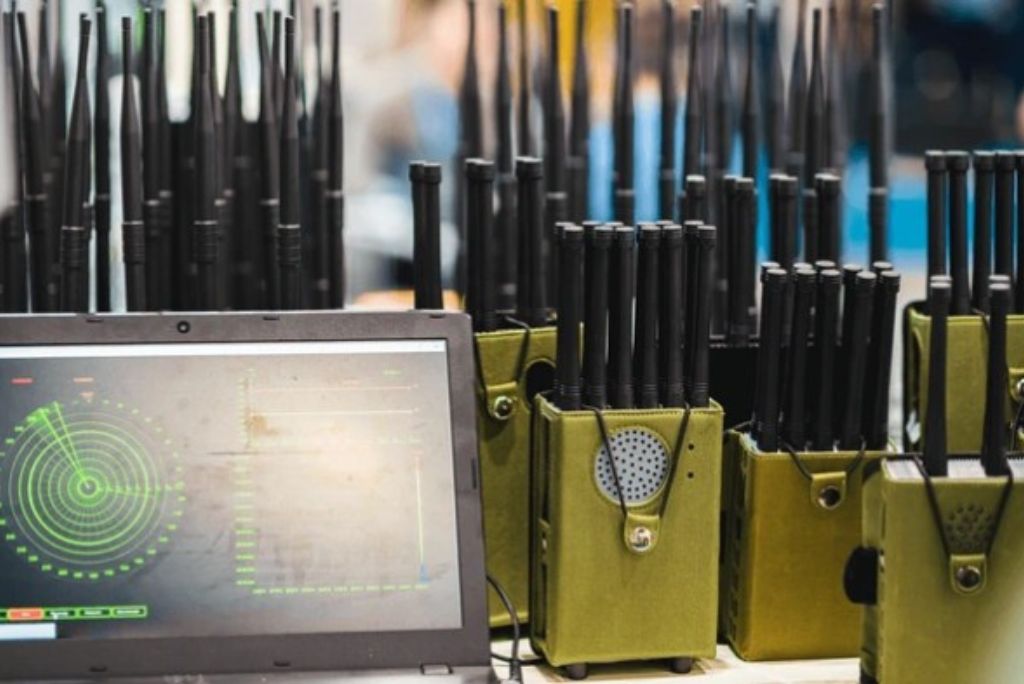
What is a jammer and how does it work?
A jammer is an interference device that emits radio frequency signals with the purpose of blocking, saturating, or disrupting legitimate communications within certain bands.
In this case, criminals are using these devices to disable satellite localization signals, which prevents the GPS systems of trucks or vehicles from functioning temporarily.
The technical principle is simple but powerful: if your GPS, GNSS, or other satellite receiver cannot capture a signal strong enough compared to the noise generated by the jammer, it loses accuracy or cannot determine its location at all.
Vulnerability of tracking systems
Many telematics tracking systems depend on satellite signals (GPS, GLONASS, Galileo) to determine location.
If these signals are blocked—even briefly—real-time tracking becomes useless. That window can be enough for criminals to carry out theft.
This exposes a systemic weakness: excessive reliance on satellite signals without robust backup mechanisms.
Lack of anti-jamming mechanisms
Many tracking devices lack built-in interference protection or jammer detection.
Mature technologies in the military or aeronautical fields (such as anti-jam GPS, frequency-hopping receivers, adaptive filtering techniques) are not widely adopted in commercial fleet applications.
This case illustrates how cutting-edge technology is not exclusive to legitimate use: criminals adopt sophisticated tools to evade controls. Technological evolution does not distinguish morality; it simply provides more tools to whoever has the means.
I find it alarming that relatively “advanced” technologies are already being used by criminal groups to bypass security systems that many companies consider reliable.
This shows that technological combat is a constant race: what is considered secure today may become obsolete tomorrow in the face of adversarial advances.
Furthermore, it reveals a gap between technological development in “controlled” or elite environments versus what reaches commercial or industrial applications.
Tracking system manufacturers must anticipate these types of attacks, not only improve interfaces or “pro” features for end users, but also incorporate active security against real-world threats.
In summary: the use of jammers for truck theft is a clear reminder that technological innovation can serve either to protect or to compromise.
It depends on the design and risk anticipation that engineers and companies integrate from the outset.
General overview and recent figures
In 2024, 15,937 cargo transport robberies were recorded on Mexican highways, according to estimates from AI27, representing an increase of about 9.15% compared to 2023.
The State of Mexico accounts for nearly 25% of those robberies, followed by Puebla (21%), San Luis Potosí (12%), and Jalisco (6%).
Between January 2024 and January 2025, the Mexican Association of Insurance Institutions (AMIS) reported approximately 9,500 stolen heavy-duty units, approaching pre-pandemic levels of around 9,800.
In heavy vehicle thefts, seven out of ten cases involve violence.
The use of jammers in Mexico
According to an analysis by Overhaul (from January to July 2025), between 80% and 85% of cargo thefts involved the use of jammers to block satellite tracking signals.
The states with the highest incidence of jammer use are: Puebla (31%), State of Mexico (21%), Guanajuato (12%), Hidalgo (8%), Querétaro (6%), and Jalisco (5%).
As for the most affected routes when jammers are part of the modus operandi, the following stand out: Mexico–San Luis Potosí (MEX-57D), Mexico–Veracruz (MEX-150D), and Querétaro–León (MEX-45D).
In 2019, ANERPV reported that among its affiliates, more than 75% of detected cargo thefts involved jammers.
That same year, a federal reform to Article 190 of the Federal Telecommunications and Broadcasting Law was approved, penalizing the use and commercialization of signal blockers (“jammers”) with sentences ranging from 12 to 15 years in prison.
Specific vulnerabilities in Mexico
Criminals have relatively easy access to these devices (at least in certain markets), which allows them to innovate in their strategies to evade detection.
The gap between what the law establishes vs. what is enforced: Although there is already an Anti-Jammer Law with severe penalties, there is clearly a lack of operational capacity to detect and seize these devices, investigate their use, and prevent their free circulation.
Insufficient technological infrastructure against real threats: Many companies still rely on basic GPS tracking without contingency plans.
Cargo transport is a critical link in the economy, and its technological vulnerability has macro-level impacts: loss of goods, higher costs, legal uncertainty, and disruption of supply chains.
Growing human and economic cost: It is not only about merchandise; drivers’ lives are at risk, the integrity of goods is compromised, insurance becomes more expensive, and losses often cannot be recovered.
All of these costs result in higher prices, increased logistics expenses, and a stronger perception of insecurity.
Urgent need for local innovation: Mexican companies (or tech networks) must develop solutions tailored to the national context, specific routes, and local criminal patterns, incorporating anti-interference technologies, predictive analysis, and collaboration between government, private sector, insurers, and public security.
The use of jammers in most cargo thefts in Mexico highlights both the sophistication of criminal groups and the weaknesses of the transportation system.
More than a technological issue, it is a challenge of coordination and strategy: without comprehensive measures that combine technology, security, and law enforcement, criminals will continue to hold the advantage.
Mexico reveals a structural vulnerability in transportation security and an excessive reliance on satellite tracking technology as the sole protection mechanism.
These devices, relatively accessible and difficult to detect in real time, expose the limitations of companies and authorities in anticipating and countering the tactics of organized crime.
About The Author