Violence Escalates on the Jalisco-Zacatecas Border: Narcodrone Attack Against Police in Colotlán Following the Killing of «El Mencho»
The area dividing Jalisco and Zacatecas continues without respite amid the violence plaguing several parts of the country. This region, where the Jalisco New Generation Cartel (CJNG) has maintained a strong presence for years, has become especially complicated since the death of Nemesio Oseguera Cervantes, known as “El Mencho.”
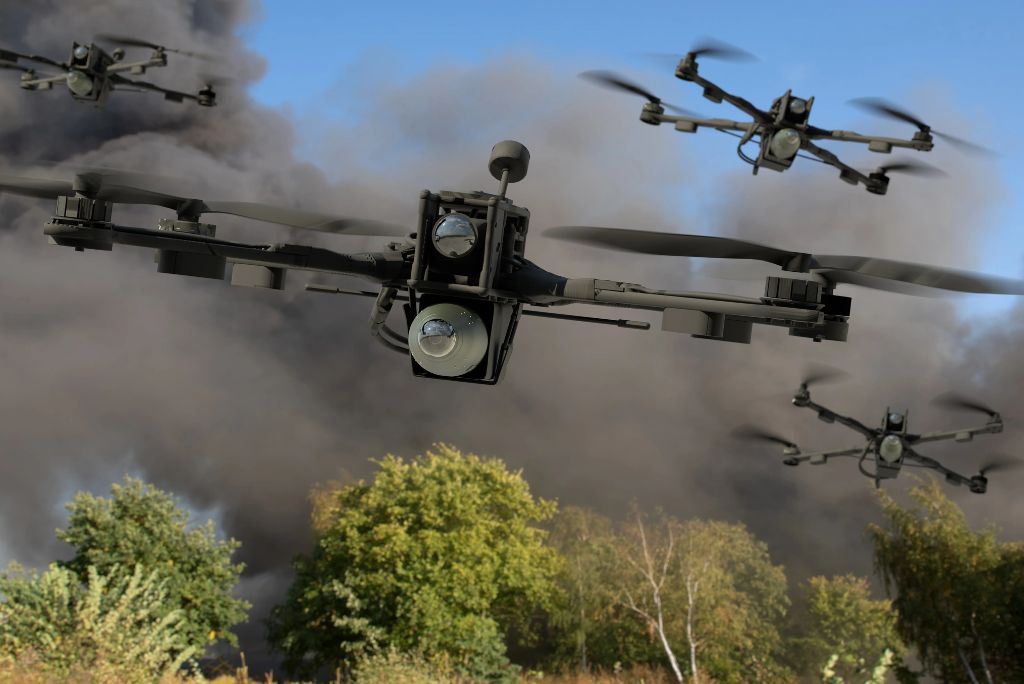
The most recent incident occurred on March 9, 2026, in the municipality of Colotlán, where members of the Jalisco Regional Police were attacked with explosives launched from drones while conducting patrol duties in the community of La Hiedrita, very close to the border with Zacatecas.
According to preliminary reports confirmed by various sources, a group of armed civilians used narcodrones to detonate explosive devices against the uniformed officers. The result was a female police officer injured in the leg by the shockwave from one of the explosions.
The officer received immediate attention at the scene, was reported stable, and was airlifted by helicopter to a hospital in Zapopan for specialized evaluation. Members of the National Guard and the Titán air tactical team from the Jalisco State Police arrived quickly at the site to reinforce the area and bring the situation under control, with no additional injuries or arrests reported at that time.
This attack is not an isolated event. It fits into the wave of violence that erupted following the killing of Nemesio Oseguera Cervantes, alias “El Mencho,” founder and leader of the CJNG, which took place on February 22, 2026, during a Mexican Army operation in Tapalpa, Jalisco. The 59-year-old capo died from multiple gunshot wounds, according to death certificate number 3830 from the Civil Registry of Mexico City.
His body was handed over to the family and buried in Guadalajara amid a heavy security deployment. The death of the top criminal boss triggered immediate reprisals: narcoblockades, vehicle burnings, and clashes in more than 20 states across the country.
The Jalisco-Zacatecas border has become one of the hottest hotspots in the country precisely because of these territorial disputes. The CJNG, although hit at its top level, retains operational capacity and has increasingly resorted to the use of narcodrones—a technology that allows it to attack security forces and rivals from a distance with precision.
Security experts have documented the rise of these devices in recent years, initially adapted from agricultural models and later modified to launch explosives, representing a qualitative leap in the armament of organized crime.
Despite official announcements about the deployment of thousands of federal personnel and hundreds of arrests that supposedly weakened the CJNG, the reality on the ground shows that violence is not subsiding. Rural communities like La Hiedrita remain exposed to crossfire, and the criminals’ use of advanced technology reveals that the cartel’s financial and logistical structures remain intact.
This persistent insecurity in regions that should be under state control highlights the limitations of a strategy that prioritizes high-profile hits on capos without fully dismantling the networks.
A change in approach is urgent: greater coordination between state and federal authorities, top-tier intelligence, and a firm-handed policy that prioritizes the real protection of citizens over triumphalist statements. While the narco modernizes, the security of Mexicans in these areas cannot continue to be a pending issue.
About The Author