El Salvador Brings More Than 400 MS-13 Leaders to a Mass Trial for 47,000 Crimes in an Unprecedented Crackdown on Organized Crime
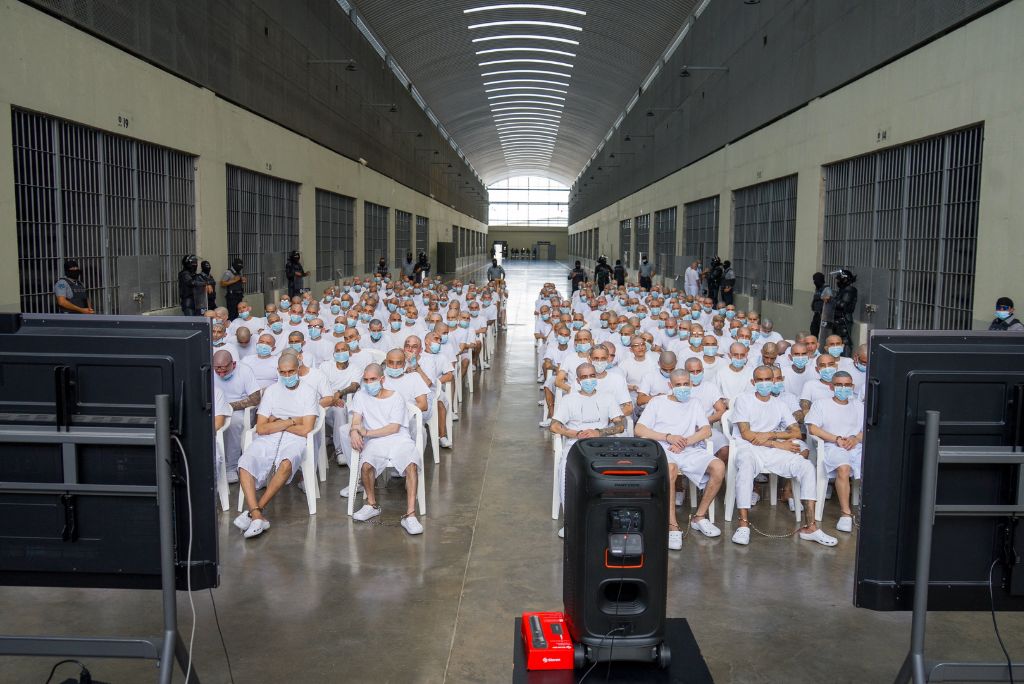
El Salvador has initiated a mass trial against more than 400 members of the Mara Salvatrucha (MS-13) gang, accused of being linked to more than 47,000 crimes committed over a decade. This is one of the largest judicial proceedings against criminal structures in the region’s recent history.
According to information from international agencies and judicial reports, there are approximately 486 defendants — most of them high-ranking leaders — facing charges that include homicides, femicides, extortion, disappearances, arms trafficking, and even rebellion against the State.
Salvadoran authorities maintain that these individuals not only participated in isolated crimes, but were part of an organized structure that operated as a “parallel state,” with territorial control and the capacity to order killings on a large scale.
One of the most relevant elements of the case is the judicial model being used: the so-called “open single macro-hearing,” which allows hundreds of defendants to be tried jointly under a single case file. This mechanism, driven by recent legal reforms, aims to speed up proceedings and directly target the command structures of organized crime.
The context of this trial cannot be understood without the state of exception in force in the country since March 2022, implemented by the government of President Nayib Bukele following a wave of violence that left dozens of murders in a single weekend. Since then, more than 90,000 people have been detained under the so-called “war on gangs.”
According to the Prosecutor’s Office, among the crimes attributed to these leaders are thousands of homicides — some estimates put the figure at more than 29,000 — in addition to systematic acts of terror against the civilian population.
The process is being carried out largely virtually, with many of the accused held at the Terrorism Confinement Center (CECOT), the maximum-security mega-prison built as a symbol of the government’s tough-on-crime policy.
While international organizations have questioned the model due to potential risks to due process, the truth is that this trial reflects a radical shift in security strategy: moving from individual arrests to dismantling entire organized crime structures.
Beyond the international debate, the internal message is clear: the Salvadoran State seeks to impose total control over organizations that for years dominated entire territories through systematic violence.
About The Author