Illegal Moroccan Migrants Are Hiding and Abandoning Parks and Plazas Across Madrid and Other Major Spanish Cities
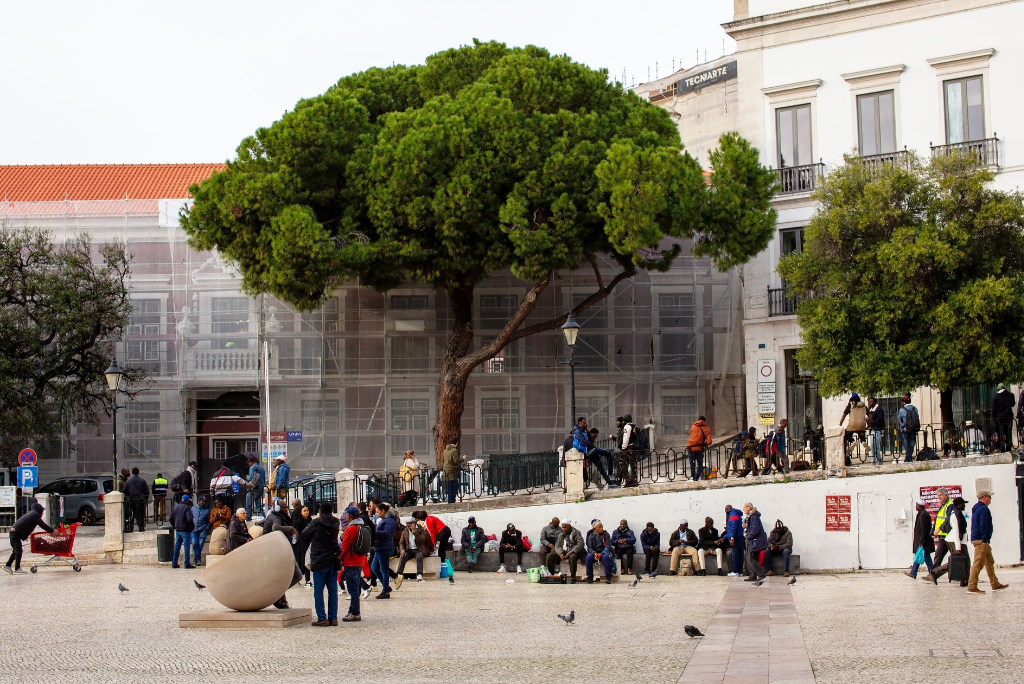
In recent weeks, public parks, squares, and gathering spots in Spain’s biggest cities — especially Madrid — have suddenly emptied out of many illegal Moroccan migrants.
The Moroccan newspaper Assabah is reporting it, accusing Spain of “police repression” against its citizens, while conveniently ignoring the latest crime statistics and the growing insecurity in Spanish neighborhoods.
According to official numbers from Spain’s Ministry of the Interior, in 2025 authorities issued 41,315 expulsion orders and actually carried out 3,398 deportations — a 12% increase over 2024 and the highest figure in five years. At least 120 Moroccan nationals already identified as illegal are now facing extradition or deportation back to Morocco.
Several others involved in serious crimes committed in Spain are also in the process of being expelled, requiring close coordination with Moroccan authorities (Spain has had a readmission agreement with Morocco since 1992, which has been renewed in practice).
Should we take this news seriously and celebrate it as a much-needed first step toward taking back control of our streets?
For years, out-of-control illegal immigration has created a powerful “pull effect” with devastating consequences for ordinary Spaniards. This isn’t about turning away people who come legally, work hard, and obey the laws. It’s about finally ending a broken system that rewards those who cut in line and enter through the back door.
The real cost to Spaniards: more crime, fewer opportunities, and crushing tax burdens
Illegal immigration is not harmless. In neighborhoods across Madrid and other cities, there has been a clear rise in street crime — violent robberies, thefts, and assaults — that hits working and middle-class families the hardest. Police sources and independent studies have shown for years that certain groups, including illegal Moroccan migrants, are heavily overrepresented in arrests for robbery, drug trafficking, and serious sexual crimes. In 2024, foreigners made up roughly 31% of Spain’s prison population — more than double their share of the overall population — with North Africans disproportionately involved in property crimes and drugs.
At the same time, Spaniards pay some of the highest taxes in Europe. A big chunk of that money goes toward housing, healthcare, and schooling for people who often don’t contribute back into the system.
The results are obvious:
- Youth unemployment for those under 25 is stuck around 23–23.8% in 2025–2026 — one of the worst rates in the entire European Union.
- Young Spaniards struggle to find stable jobs or affordable housing.
- Public services are overwhelmed and breaking down.
Everyday Spaniards watch their hard-earned tax dollars fund a system that puts them last: fewer job chances, more danger on the streets, and the sinking feeling that Spain no longer puts its own people first.
Does the tough approach actually work? Deporting a handful isn’t enough
The fact that illegal migrants are now hiding is actually a good sign. It proves that real consequences and the threat of deportation change behavior and weaken the “pull effect.” But this is only the beginning.
In 2025, even with tens of thousands of expulsion orders, only a small percentage were actually enforced. Irregular arrivals dropped to 36,775 — a 42.6% decrease from 2024 — thanks in part to better deals with countries of origin.
Spain urgently needs a strong, coherent immigration and national security policy that puts Spanish interests first:
- Systematic deportations of every illegal migrant without legal right to stay — starting with those who have criminal records.
- End mass amnesties, like the recent government plan to legalize around half a million immigrants (the process started in April 2026 for those who arrived before December 31, 2025). These moves only reward illegal behavior and trigger new waves of migration.
- Strict border enforcement and real agreements with source countries like Morocco that guarantee fast readmissions in exchange for cooperation.
- Put Spaniards first in jobs, public housing, and welfare benefits. Scarce resources shouldn’t be handed out while Spanish kids can’t find work and retirees worry about their pensions.
Legal, selective, and orderly immigration — the kind that fills real labor needs and brings in people willing to embrace Spanish values and obey Spanish laws — is a good thing. Mass illegal immigration, with all its costs in crime, social division, and taxpayer money, is something completely different.
Spain First: Reclaim Sovereignty and Common Sense
What’s happening in Madrid right now should be standard practice, not a rare event. This is a structural problem that Spanish leaders have avoided confronting with real courage for far too long. Ordinary Spaniards are fed up with watching their safety and way of life ignored while illegal activity is tolerated.
Spain is not a borderless country or an endless shelter for the world. The government has a duty to defend national sovereignty, protect Spanish culture, and put the security and future of its own people first.
With national elections just months away, Spaniards would benefit enormously from a firm crackdown on illegal immigration — ending the dangerous “pull effect” once and for all and passing policies that always put real Spaniards first.
About The Author