The Nicolás Maduro case in New York enters a critical phase: without private defense and under public assistance
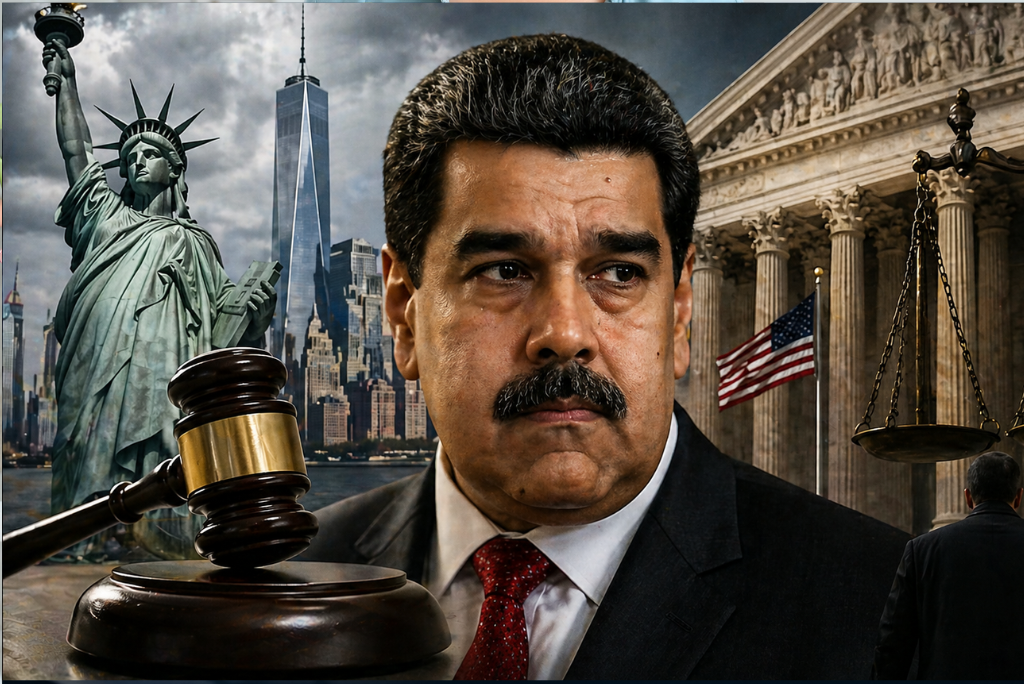
The judicial process facing Nicolás Maduro in New York has entered a decisive phase following the resignation of his private legal team. From now on, the former Venezuelan leader will be represented by federal public defenders, a situation that marks a turning point in his legal strategy.
The withdrawal of his legal team, led by attorney Barry Pollack, is due to a central issue: the inability to receive legal fees. Sanctions imposed by the U.S. Department of the Treasury’s Office of Foreign Assets Control (OFAC) have blocked access to Venezuelan funds, preventing the financing of the defendant’s private defense.
A shift forced by sanctions
Federal Judge Alvin Hellerstein, who is overseeing the case in the Southern District of New York, has begun proceedings to appoint public defenders after concluding that Maduro has no accessible financial resources in the United States to fund his legal defense.
This situation raises an important legal dilemma: the defendant’s right to choose his own counsel versus restrictions imposed by international sanctions. The outgoing defense team had already warned that, without access to funding, maintaining private representation was not feasible.
From elite law firms to public defense
The change is significant. Maduro initially relied on high-profile U.S. attorneys, but a combination of legal pressure, financial restrictions, and judicial decisions has led to his transition into the federal public defender system.
This type of representation, guaranteed by the U.S. state, ensures the right to legal defense, but typically involves fewer resources and less strategic flexibility compared to private teams specializing in complex international cases.
A case that continues to move forward
While the defense is being reorganized, the case continues. Prosecutors are pursuing multiple lines of investigation, including allegations related to drug trafficking, corruption, and possible irregularities linked to political operations in Venezuela.
The court is also reviewing sensitive issues such as Maduro’s nationality and potential implications for his legal status—factors that could influence the course of the proceedings.
It should be noted that the judge has previously rejected attempts to dismiss the case, reinforcing the continuation of legal proceedings in the United States.
Political impact and international context
The progression of the case carries implications beyond the legal sphere. In Venezuela, the situation has been officially described as temporary, while executive power continues under other figures within the government.
Internationally, the case is being closely watched as a potential precedent in the enforcement of financial sanctions and in the ability of judicial systems to prosecute high-level political figures.
A decisive phase
This new stage—marked by public defense representation and financial limitations—introduces uncertainty regarding Maduro’s legal strategy and the outcome of the case. What began as a highly politicized process is increasingly evolving into a more technical legal battle, where the material conditions of the defense may prove decisive.
Ultimately, the case is entering its most delicate phase, with legal, political, and geopolitical implications that could extend far beyond the courts of New York.
Read more:
About The Author