Rafael López Aliaga leads historic mobilization in Lima to defend Peruvian democracy
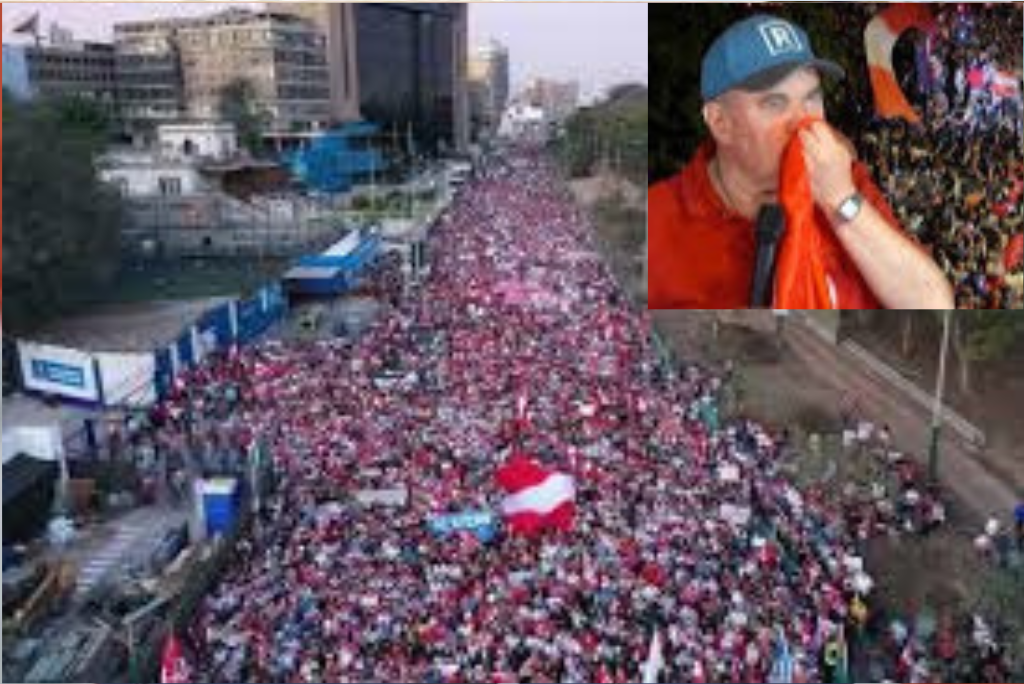
Thousands of Peruvians mobilized in Lima in the so-called “March for Democracy,” led by Rafael López Aliaga, amid growing scrutiny of the electoral process, delays in the vote counting, and an extremely tight race for second place heading into the presidential runoff.
The protest brought together citizens demanding transparency, a review of challenged ballots, accountability from electoral authorities, and answers regarding a series of incidents that have fueled public distrust.
Among the events that have sparked controversy are delays in the installation of polling stations in Lima, logistical failures in the distribution of electoral materials, votes and tally sheets subjected to manual review, and an investigation into the handling of electoral materials. Political complaints have also been filed against electoral officials, including criticism directed at the head of ONPE, Piero Corvetto.
With approximately 93.5% of ballots counted, preliminary results place Keiko Fujimori in first place with around 17.05% of the vote. The real battle is concentrated in second place, where Roberto Sánchez records about 12.0%, while Rafael López Aliaga appears with 11.91%, a minimal difference that keeps the outcome open due to thousands of votes and tally sheets still under review. The JNE Peru has set May 15 as the deadline to officially determine who advances to the June 7 runoff.
Protesters argue that the reported irregularities justify a thorough review. Among the claims raised by sectors supporting the protest are observations regarding challenged tally sheets, document inconsistencies, custody of electoral material, and concerns about the impact of logistical errors on the final result.
At the same time, it is important to note that international observers, including the European Union mission, have said they found no evidence of organized fraud, although they did acknowledge logistical problems and tensions that have affected trust in the process.
For participants in the march, the mobilization aims to pressure for clarity at a time when every vote could prove decisive. With such a narrow gap between Sánchez and López Aliaga, even a small variation in challenged tally sheets could alter who will face Fujimori in the runoff.
What began as a controversy over delays and operational failures has evolved into a broader political crisis, with street protests, legal challenges, cross-accusations, and a growing public demand for transparency. While the country awaits the final result, the March for Democracy has become a symbol for part of the electorate demanding that every vote be fully audited and that the process regain credibility.
Within the context of the “March for Democracy,” Rafael López Aliaga has maintained a particularly critical stance toward the electoral process and the institutions responsible for vote counting. The leader of Renovación Popular has repeatedly claimed that serious irregularities occurred during the count, even describing the process as “electoral fraud” and comparing it to scenarios of “institutional manipulation” in other countries in the region.
In recent statements, López Aliaga has directly questioned the performance of ONPE, claiming that the body did not fully guarantee transparency in the process. He has even called for public explanations from the head of the institution, Piero Corvetto, whom he holds politically responsible for delays and issues in the count.
His statements have been widely reported in international media such as Infobae, where it is noted that he referred to an alleged “electoral fraud unique in the world” and demanded a comprehensive review of challenged ballots, claiming that thousands of votes were affected by failures in the electoral system.
In the same line, López Aliaga has insisted on greater oversight and transparency in the process, while the JNE Peru maintains that the ballot review process follows established legal procedures and official deadlines.
Read more:
About The Author