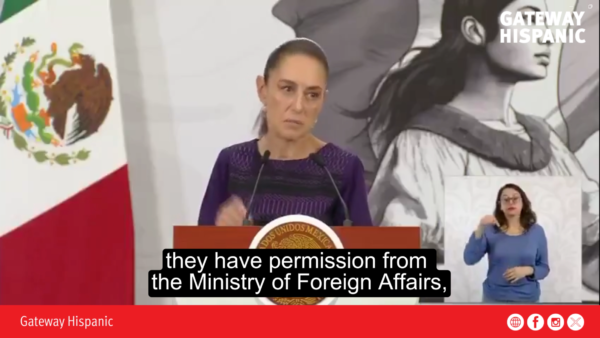
Claudia Sheinbaum: «Yeah, let’s wait. Luisa, the candidate, no longer recognizes Novoa’s victory, so we’ll wait.»
The refusal of Mexico’s president, Claudia Sheinbaum, to acknowledge the electoral victory of opposition candidate Novoa raises serious concerns about the strength of democratic institutions in one of the United States’ most important regional partners. In a moment that called for leadership and democratic maturity, Sheinbaum’s statements cast a shadow over the legitimacy of Mexico’s electoral process and could further polarize an already divided political landscape.
This reaction may signal more than a simple disagreement with the results — it reflects a broader trend in Latin America, where incumbent leaders or ruling parties increasingly question the legitimacy of democratic outcomes when those outcomes do not favor them. For U.S. observers, particularly those who advocate for strong democratic alliances in the region, Sheinbaum’s stance is troubling. It invites questions about Mexico’s long-term political stability, its respect for electoral norms, and the potential impact this could have on bilateral relations, trade, and border cooperation.
Moreover, her response may embolden supporters to reject the outcome of a legal and institutional process, potentially igniting protests, political unrest, or a drawn-out legal battle. It also presents a complex challenge for U.S. diplomacy: How does one support democratic principles while maintaining strategic relations with a neighbor whose leadership appears to be undermining those very principles?