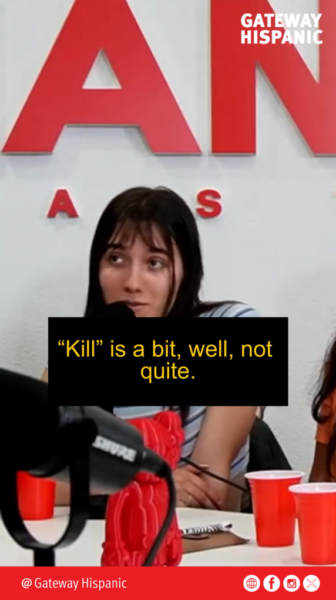
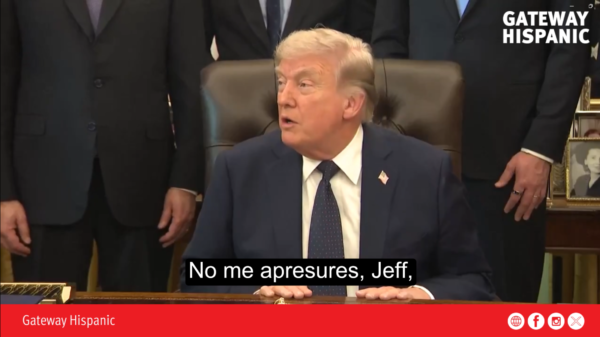
In a political landscape marked by polarization, fragmented digital audiences, and cultural shifts accelerated by social media, President Donald J. Trump recently made a statement that stunned analysts and campaign strategists: he claimed he won the youth vote, a demographic historically elusive for the Republican Party. With a triumphant tone, Trump insisted that young people “are respecting him again,” and that—unlike other conservative candidates—he managed to connect with them directly, emotionally, and consistently.
“Young people are respecting us again; I won the youth vote, Republicans never win the youth vote, I won it easily,” Trump told an audience of supporters. He then added a direct thank-you to Charlie Kirk, founder of Turning Point USA (TPUSA), and to the platform TikTok—two players who, according to him, were essential in consolidating his popularity among younger generations.
His words did not go unnoticed. Not only because they contradict the long-standing trend of youth voters—who overwhelmingly support Democratic candidates—but because they also reflect a phenomenon analysts have been observing for years: the rise of a new conservative youth that does not identify with traditional conservatism, but rather with a message that is disruptive, digital, and openly combative.
The New Conservative Youth: A Growing Phenomenon
While a large portion of young Americans continues to lean toward progressive positions, there is a rapidly growing segment defined by its rejection of the dominant discourse in universities, media, and cultural spaces. Within this environment, the figure of Charlie Kirk has risen—one of the main architects of reconnecting the Republican movement with Generation Z.
TPUSA has become a youth-driven political machine: massive conferences, viral content, conservative influencers, and a strategy built around the narrative of “right-wing counterculture.” In this ecosystem, President Trump emerges as a symbol of rebellion against the establishment. For many young supporters, Trump does not represent the political elite, but rather the outsider who challenges the media, mocks traditional institutions, and confronts critics without hesitation.
TikTok: The Unexpected Ally
Even more controversial was Trump’s reference to TikTok. Over time, TikTok has become a political battleground where conservative, satirical, and anti-establishment content circulates with overwhelming popularity.
Trump acknowledged that TikTok was a key tool for reaching young people—even those who do not consume traditional media or follow politics through conventional channels. What was once seen as a platform dominated by superficial trends, dances, and entertainment has become a space where millions of users engage with short, fragmented, highly emotional political commentary.
For some Republican strategists, TikTok has a decisive advantage: its algorithm does not discriminate or editorialize content based on political preference; it boosts whatever generates interaction. And few political figures generate as much engagement as Trump.
The president’s mention of the platform confirms that the Republican Party has learned to use tools it once dismissed or viewed with suspicion. For a generation that lives “inside” social media, this represents a structural shift in political competition.
Breaking a Paradigm: Can a Republican Really Win the Youth Vote?
Historically, the youth vote in the United States has leaned toward the Democratic Party, especially since the 1990s. Progressive rhetoric, an emphasis on diversity, social justice policies, and cultural support from entertainment industries have reinforced that trend.
However, economic challenges, frustration with the rising cost of education, dissatisfaction with job prospects, inflation, and growing cultural tensions have opened the door to alternative discourses. Increasingly, young people are criticizing political correctness, cultural relativism, and the over-ideologization of educational institutions.
Trump’s rhetoric—irreverent, confrontational, and unapologetic—fits surprisingly well with this new wave of youth discontent. To these young voters, his style does not come across as “harsh,” but as a form of authenticity in a political system they perceive as manipulated and out of touch.
Trump’s claim that he won the youth vote—though still lacking verifiable data—signals an ongoing cultural battle. His message appears to resonate in segments that Republicans had struggled to reach for decades.