Brazil’s Supreme Court refuses to rein in Alexandre de Moraes, intensifying the hunt against Jair Bolsonaro.
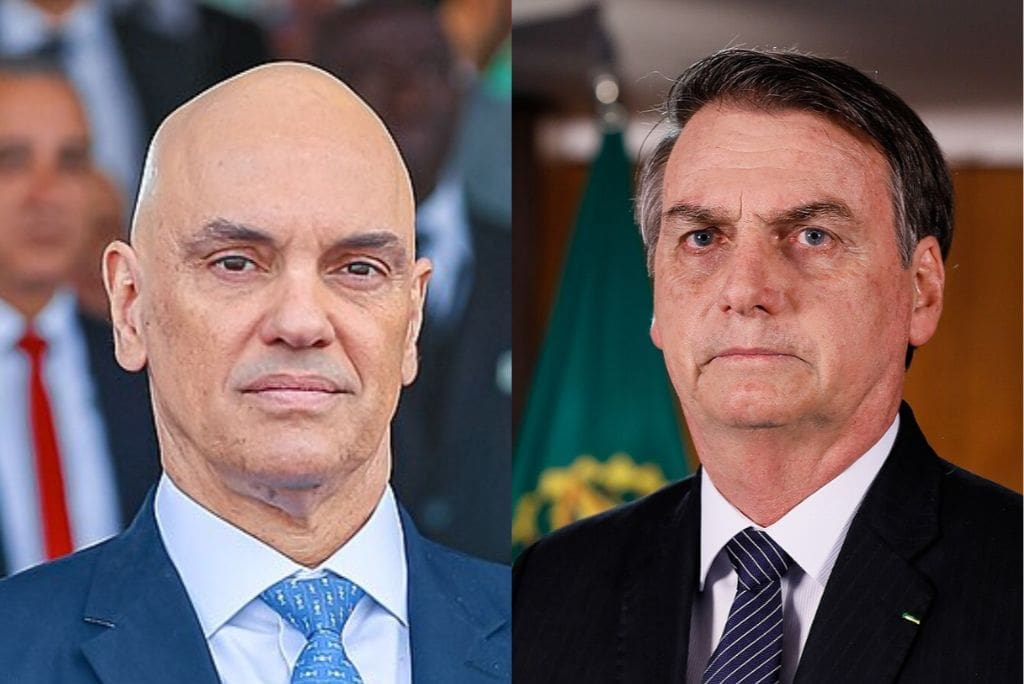
Brazil’s Supreme Court has decided, by majority vote, to keep Judge Alexandre de Moraes in charge of the trial against former President Jair Bolsonaro. The ruling, issued on March 20, 2025, rejects the defense’s request to remove Moraes and other magistrates, such as Flávio Dino and Cristiano Zanin, accused of bias.
This decision not only deepens the judicial siege against Bolsonaro but also places the independence of the judiciary and the political use of institutions at the center of the debate in Brazil.
Bolsonaro, leader of the Brazilian conservative movement, faces accusations of allegedly attempting a coup following the 2022 elections, won by Luiz Inácio Lula da Silva. The defense argued that Moraes, Dino, and Zanin could not guarantee impartiality.
The reasons? Moraes is considered a «victim» of the alleged coup plot, Zanin was Lula’s lawyer, and Dino, a former Justice Minister, had already filed complaints against Bolsonaro.
However, the Supreme Court dismissed these allegations, consolidating Moraes’ power as a key figure in this process. The vote, which lasted until Thursday, March 20, had the support of Supreme Court President Luís Roberto Barroso.
According to Barroso, the defense did not present «clear, objective, and specific» evidence of bias. The questioned judges did not vote on their own cases but did on those of their colleagues, a detail that did little to calm criticism from Bolsonaro’s supporters, who see this as political persecution disguised as justice.
Alexandre de Moraes is no stranger to this conflict. Since his appointment to the Supreme Court in 2017 by Michel Temer, he has become a scourge of the Bolsonaro movement. He led investigations against «fake news» and ordered massive crackdowns following the storming of government buildings in Brasília on January 8, 2023. He even temporarily removed Brasília’s governor, Ibaneis Rocha, an ally of Bolsonaro, for alleged «collusion» with the protesters.
Moraes’ record speaks for itself. A former prosecutor in São Paulo and former Justice Secretary under Geraldo Alckmin’s government, his judicial career has been marked by controversial decisions. But the current case goes even further. The Brazilian Prosecutor’s Office accuses Bolsonaro and about thirty others of plotting a coup to prevent Lula’s inauguration.
Among the accused are former Defense Minister Walter Braga Netto and General Mario Fernandes. The defense, however, insists that there is no solid evidence, and Bolsonaro himself has compared this persecution to tactics used by regimes like Venezuela or Cuba.
The Supreme Court not only upheld Moraes but also allowed judges appointed by Bolsonaro, Nunes Marques and André Mendonça, to express their opinions. Mendonça voted in favor of removing Moraes and Dino, but he stood alone.
This highlights the court’s composition: out of its 11 members, only two were appointed by Bolsonaro, while seven have ties to leftist governments or Temer, a balance that conservatives consider biased.
Pressure on Bolsonaro remains unrelenting. In October 2024, Moraes seized his passport, citing flight risk as investigations into the January 8 events progressed.
Since then, Bolsonaro has said he will quit politics if he remains disqualified in 2026, hinting at his frustration: «I would only have one option left—to take care of myself before they kill me.»
The case has reached beyond Brazil. In February 2025, Trump Media & Technology Group, the company behind Truth Social, sued Moraes for violating freedom of speech after he ordered the closure of a Bolsonaro supporter’s account in the U.S. The lawsuit, backed by Rumble, argues that Moraes’ actions threaten «open debate» even outside Brazil.
Criticism of Moraes is not new. In 2023, Brazilian lawyers filed two petitions in the Senate to remove him from the Supreme Court, accusing him of abuses in the «fake news» case. Bank account freezes, social media censorship, and arrests, such as that of Indigenous leader José Acácio Serere Xavante, were cited as overreach. However, the Senate, responsible for approving or removing Supreme Court justices, did not proceed with the petitions.
The judicial crackdown has political ramifications. Eduardo Bolsonaro, the former president’s son, temporarily exiled himself in the U.S. in 2025, denouncing Moraes’ persecution. Meanwhile, Jair Bolsonaro insists on his innocence and plans to return to Brazil to lead the opposition against Lula, as he confirmed at CPAC.
The left praises Moraes as a defender of democracy, but his critics see him as a judicial tyrant. Even the progressive press, which once lauded him, now questions whether his unchecked power is itself a democratic threat.
A March 20, 2025, article from RFI highlights that the Supreme Court rejected Bolsonaro’s appeal with a strong majority, yet doubts about the fairness of the process persist.
The Supreme Court’s ruling reinforces the narrative of a judiciary aligned with the Lula administration, willing to sacrifice Bolsonaro on the altar of «democratic stability.»
However, it also fuels further polarization. Bolsonaro’s supporters, far from surrendering, see each decision as another reason to resist.
If justice becomes a political weapon, who guarantees its legitimacy? Moraes, with his record, seems more like a crusader than an impartial judge. Bolsonaro represents millions who reject the return of the left.
This confrontation is not just a trial; it is a battle for the soul of Brazil. And as the Supreme Court tightens the noose, the question remains: Is this justice or revenge?
About The Author