Chinese Consul in Osaka Posts Threat to Cut Off Takaichi’s Head and Japan Declares the Comment “Extremely Inappropriate” and Files Formal Complaint in Beijing
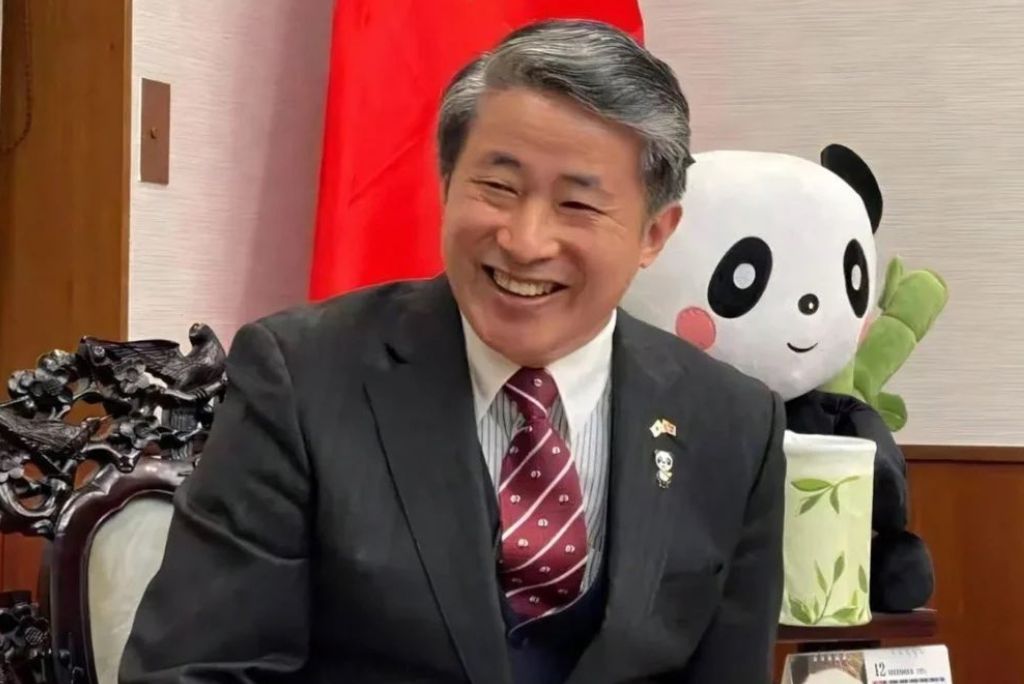
The Chinese Consul General in Osaka, Xue Jian, posted an incendiary message on the social network X urging to “cut off the filthy head” of Japanese Prime Minister Sanae Takaichi, in response to her statements about a possible Japanese military intervention in the event of a Chinese attack on Taiwan.
This act not only violates the basic norms of diplomacy, but also reveals the Beijing regime’s intolerance for any defense of Taiwanese sovereignty—a principle that, as a conservative, I firmly defend against the authoritarian expansionism that threatens global freedom.
The trigger occurred on November 7, 2025, during a session in the Lower House of the Japanese Parliament. Takaichi, a conservative figure and the first woman to assume the office of prime minister the previous month, responded to an opposition lawmaker about scenarios involving a “situation threatening national survival.”
With strategic clarity, she explained that a Chinese naval blockade or invasion of Taiwan—an democratic island located just 100 kilometers from Japan’s southwestern coasts—could activate collective defense under the 2015 security law.
This legislation, promoted by her mentor Shinzo Abe, allows the Japanese Self-Defense Forces to act if an ally such as the United States faces an existential crisis that endangers Japan’s survival.
Takaichi emphasized that the government would analyze “all factors” before deciding, but reiterated that such statements reflect Tokyo’s official stance, without retracting despite pressure. Beijing’s reaction was immediate and disproportionate, activating its “wolf warrior” rhetoric that generates so much contempt in the West for its aggression disguised as sovereignty.
On November 8, Xue Jian shared an article from the Asahi Shimbun newspaper about Takaichi’s words and commented: “We have no choice but to cut off that filthy neck that has lunged at us without hesitation. Are you prepared?”
Unfortunately, the original post was deleted hours after its publication on November 8, 2025, as reported by multiple reliable media outlets. There is no active direct link available on X, as it was removed to mitigate the diplomatic controversy.
The spokesperson for the Chinese Ministry of Foreign Affairs, Lin Jian, defended the message as “personal” and against Takaichi’s “erroneous and dangerous” statements, accusing Japan of “serious interference” in internal affairs and invoking historical responsibilities for Japan’s invasion of Manchuria in 1931.
Japan did not flinch in the face of this intimidation. On November 10, the Ministry of Foreign Affairs filed a formal complaint in Beijing, described by Foreign Minister Toshimitsu Motegi as “extremely inappropriate.”
On November 14, Tokyo summoned Chinese Ambassador Wu Jianghao to protest, while the Liberal Democratic Party (LDP) adopted a resolution urging Xue be declared “persona non grata” for his possible expulsion if Beijing does not act.
This crisis aggravates a context of high regional sensitivity. Taiwan, which China claims as inalienable territory despite its democratic government since 1949, is a powder keg: Beijing does not rule out force for its “reunification,” while Japan and the United States strengthen alliances to deter it.
Takaichi, an Abe protégée and frequent visitor to the Yasukuni Shrine—a symbol of Japanese historical memory that Beijing criticizes—has intensified her rhetoric since taking power, though she qualified on November 10 that her comments were “hypothetical.”
However, on November 11 she reaffirmed Tokyo’s view toward Taipei as “changed,” aligning more closely with the island at a time when 70% of Japanese trade passes through the Taiwan Strait.
China responded with military maneuvers in the Yellow Sea and a travel advisory on November 15, discouraging visits to Japan due to “rising tensions.” Actions like these illustrate the danger of Chinese authoritarianism: a regime that, instead of engaging in dialogue, resorts to personal threats to silence defenses of democracy.
Japan, with its tradition of honor and Atlantic alliance, acts with prudence but firmness, reminding us that strategic ambiguity cannot yield to aggression.
The escalation underscores the need for a free Indo-Pacific, where nations like Japan and Taiwan do not live under the shadow of Beijing’s intimidation. If Xi Jinping seeks stability, he must discipline his “wolves” and respect the Vienna Convention on Diplomatic Relations, which prohibits such excesses. Otherwise, the fire he ignites could consume everything.
About The Author