China Launches the K Visa: Opportunity for Talent or a Communist Maneuver?
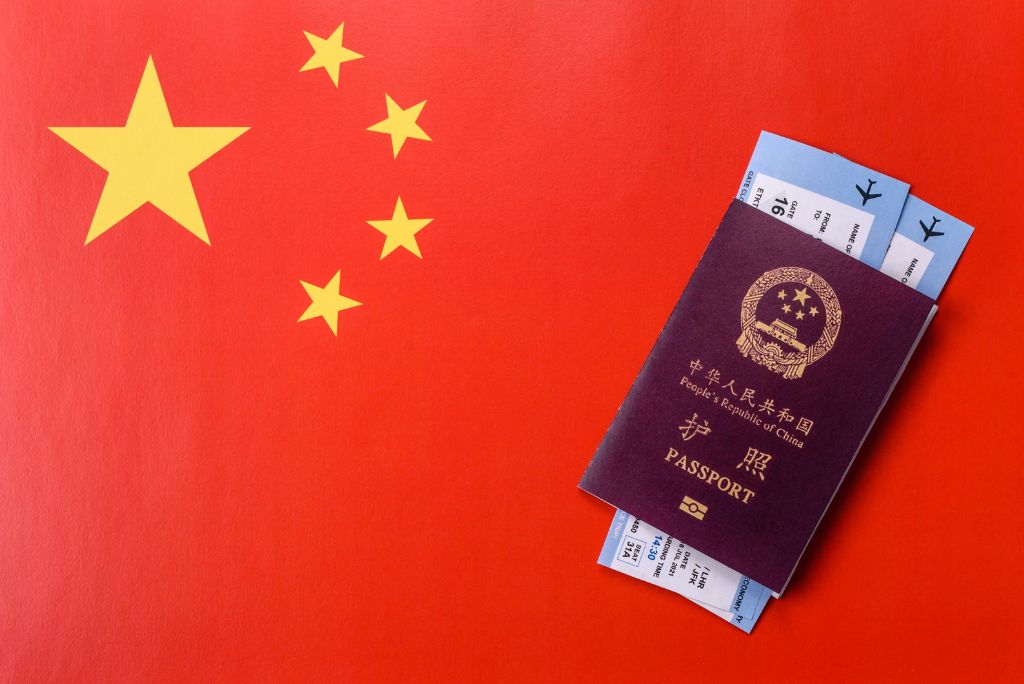
© Tetiana Chernykova / Shutterstock
China rolled out the K Visa, a mechanism designed to attract young foreign nationals with training in science, technology, engineering, and mathematics (STEM).
The new visa promises extended stays, multiple entries, and the ability to conduct research, start businesses, or seek employment without the need for prior employer sponsorship.
Beijing presents it as a step toward internationalization and innovation cooperation, complementing the R Visa, in place since 2013 for elite talent.
At first glance, the K Visa appears to be an open window to the world—especially when compared to the restrictive U.S. H-1B visa, which has become more expensive under the current administration, with costs exceeding $100,000, lotteries, and capped quotas.
For many foreign professionals, particularly Indians, China could appear as a cheaper and more flexible alternative.
But the key question is whether this openness is genuine. China graduates millions of engineers and scientists each year, many of whom face high unemployment rates in technical sectors.
Prioritizing foreigners with bachelor’s degrees while its own advanced-degree holders struggle to find decent jobs has sparked internal criticism and protests on Chinese social media.
Mandarin remains an essential requirement in companies and universities, severely limiting real opportunities for those who do not master the language.
China launches a new “K Visa” to attract young foreign STEM talent.
— Open to recent graduates in technology/engineering; no job offer required.
— Provides entry, residency, and work rights with multiple-entry stays.
— Part of China’s “Talent Power Strategy” to counter rising H-1B fees in the United States.
Moreover, the country maintains tight social and political control. Censorship, constant surveillance, and the lack of creative freedom contrast sharply with the image of openness that Beijing seeks to project.
Details regarding financial incentives, family reunification, or full work authorization remain vague, raising suspicions that the K Visa is more of a propaganda gesture than a serious immigration policy.
The timing chosen by China is no coincidence. As the United States tightens its immigration policy to protect the jobs and sovereignty of its citizens, Beijing offers easier entry—but under a communist regime that prioritizes absolute control.
The K Visa may look attractive on paper, but the reality is that foreigners will remain monitored visitors, without full access to long-term rights and opportunities.
This contrast highlights the wisdom of firm immigration policies like those of the United States. Western measures that prioritize citizens and local families aim to protect markets, social cohesion, and sovereignty from exploitation and chaos.
By contrast, the K Visa illustrates how an authoritarian regime can simulate openness to attract investment and foreign talent without truly granting freedom or security to those who arrive.
Ultimately, the K Visa may appear to be a bright opportunity, but its underlying reality reveals that under Chinese communism, innovation and foreign talent will always be subordinate to state control—and freedom will be nothing more than a carefully calculated mirage.
READ MORE:
About The Author