The 44-year-old German woman Silke Sauer was found beheaded in an abandoned area of Scandicci near Florence; the suspect is a Moroccan immigrant
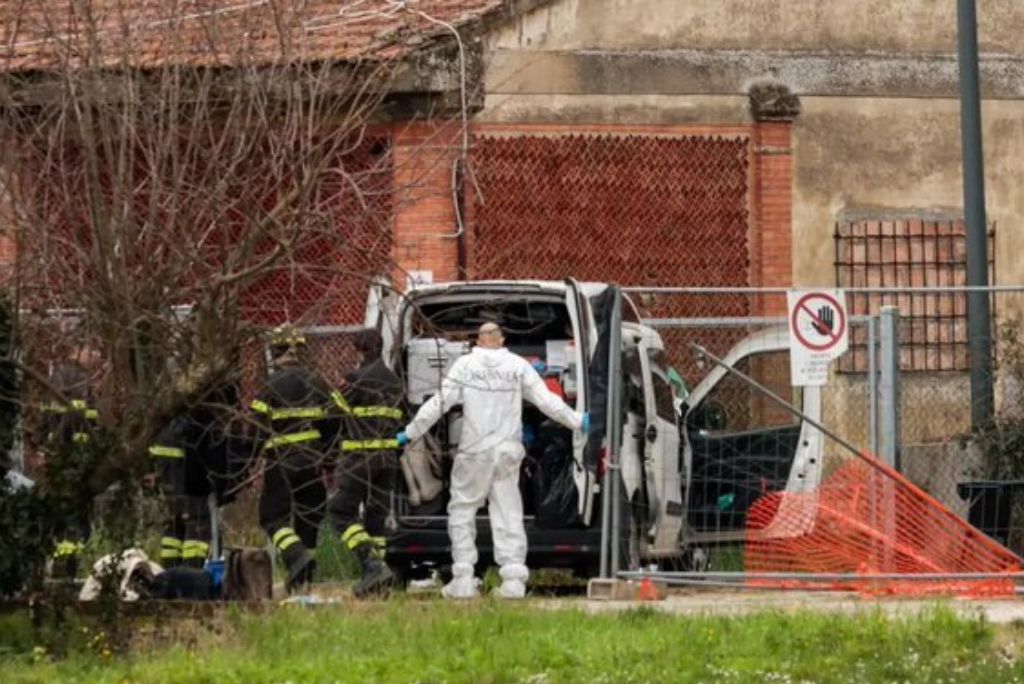
Scandicci, a suburb of Florence in the Tuscany region, has become the scene of a horrific crime in Italy.
On the morning of Wednesday, February 18, 2026, the carabinieri discovered the decapitated body of Silke Sauer, a 44-year-old German citizen who was homeless, in the abandoned area of the former CNR (Consiglio Nazionale delle Ricerche) on Via Galilei.
The site, unused for years, has turned into a refuge of makeshift camps, garbage, and dense vegetation, frequented by homeless people and irregular occupants, less than 100 meters from a school.
The corpse had its head completely severed from the body and showed signs of partial dismemberment. Next to it were found a machete and a knife with blood traces, as well as clothing belonging to the suspect with stains compatible with the victim’s genetic profile.
The autopsy, conducted by forensic pathologist Maurizia Tiberio, will determine the exact date of death and the degree of cruelty employed.
Hours later, the Florence Prosecutor’s Office, headed by Prosecutor Rosa Volpe and coordinated by Deputy Prosecutor Alessandra Falcone, ordered the fermo d’indiziato di delitto against Issam Chlih, a 29-year-old Moroccan (he will turn 30 in October) who was also homeless.
The man, already known to law enforcement, had previously been arrested for drug-related offenses, served time in Sollicciano prison, and was subject to daily reporting obligations at the Scandicci carabinieri station.
Residents had repeatedly reported him for aggressive and irascible behavior, often accompanied by a large Staffordshire bull terrier dog that guarded the area.
The suspect was hospitalized on Tuesday, February 17, at Torregalli Hospital in Florence following an episode of agitation that required mandatory sanitary treatment (TSO).
There, under carabinieri custody, he was notified of the arrest on Thursday night. His lawyers, Laura Grillo and Christian Vannucchi, confirmed that he is remaining silent for the time being.
Witness accounts and surveillance cameras place him days earlier wearing a blood-stained sweatshirt and walking shirtless through Scandicci after the crime. The dog was removed by veterinary services and transferred to a municipal kennel.
Both the victim and the alleged perpetrator shared the same reality of extreme marginalization in that degraded enclave. Silke Sauer, whose identity was confirmed through DNA and contact with the German embassy (she had identified herself by that name during a check in Rome last year), moved around the area seeking hot meals and clothing at social canteens.
Police sources indicate that the two knew each other and that the motive could be related to a dispute over trivial reasons typical of street survival, although the investigations remain open and no hypothesis is ruled out.
Colonel Luigi De Simone, provincial commander of the Florence carabinieri, described the incident as “a very serious crime, particularly efferato” and noted that “several indicative elements have converged on hypotheses of responsibility that are still under examination by the judiciary.”
The exact nature of the relationship between the two and the precise motive have not yet been established.
This case once again highlights the risks of uncontrolled immigration and the inability of progressive European policies to manage integration and security.
An individual with a criminal record for drugs, under precautionary measures, and with a history of aggression remained free in a public space turned into a no-man’s-land due to institutional neglect.
While the European left continues to promote narratives of “unconditional welcome” and silences these tragedies when the perpetrator is a immigrant, Italian families and tourists see their cities degrade and their lives put at risk.
Scandicci, once peaceful, is today an example of what happens when ideology is prioritized over law and order.
The investigations continue. The suspect is expected to appear before the investigating judge on Monday. Europe cannot keep allowing these tragedies to repeat while ignoring the origin of the violence.
About The Author