Jesus de Salvador y Cerdan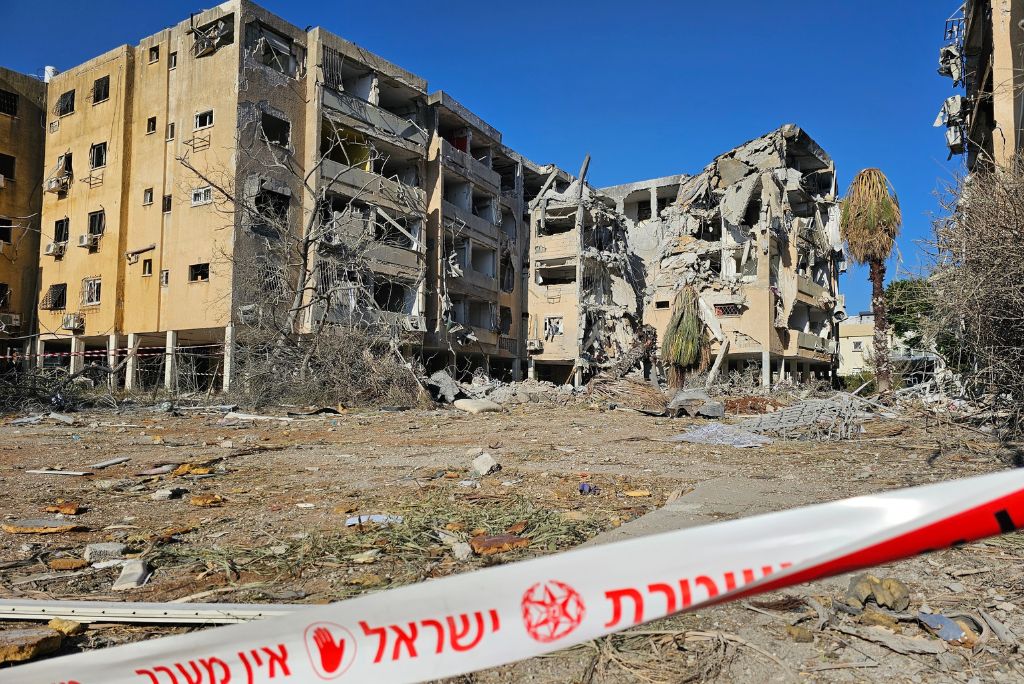
Iran is finished, or at least that’s what it increasingly seems to be happening to the tyrannical regime, and moreover, a majority of the population wants it—especially the women, who are tortured, belittled, and humiliated by the Shia theocratic regime of the ayatollahs, without it seeming to bother anyone around here much.
It looks like we are at the beginning of the end of a situation that already in January led us to publish an article titled “Iran, Game Over?”, in which we already discussed whether the regime appeared to be cracking or not, and the amount of human resources it had to resist, which at the time seemed like it would.
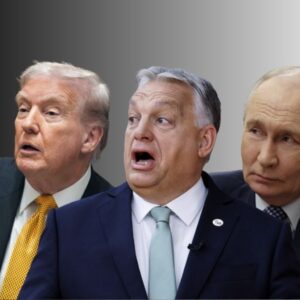
That was the case until Donald J. Trump came back and decided to finish the job, together with Benjamin Netanyahu, that was started in last summer’s 12-day war.
In this short conflict, it was shown that the wolf wasn’t as fierce as it was painted, making a military fool of itself given the extremely high expectations created by the Islamists.
I would just like to add a quick brushstroke (this paragraph) of international law regarding something that has been cited these days, specifically the legitimacy of the attack or not.
Just recall that, after the summit held at the UN headquarters in New York from September 14 to 16, 2005, Resolution 60/1 of October 24, 2005, was approved by the United Nations General Assembly, establishing the responsibility to protect populations from genocide, war crimes, ethnic cleansing, and crimes against humanity; it first establishes it as an obligation of States toward their own populations, then secondarily with the help of the International Community (if they cannot do it alone), and finally, if States fail in that obligation, the International Community must impose that protection when a State is massacring its citizens.
The procedure for its application would be another matter; but you know the old legal aphorism from Saint Paul in his Second Letter to the Corinthians, “for the letter kills, but the Spirit gives life,” and I don’t know if you prioritize procedure over the lives of those massacred citizens.
On the other hand, and now on the geopolitical level, one thing is evident: a country cannot pretend, cannot spend nearly half a century threatening to kill the most powerful country in the world—the USA—while also calling it the Great Satan, and stating that it will exterminate what it calls the Little Satan—Israel—, one of its main, if not the primary, allies, even promoting attacks and financing all kinds of terrorism and conflicts against them for that entire nearly half-century, and then start a nuclear weapons program and expect nothing to happen.
Whether by civilian or military means, the USA and Israel have decided to put a complete end—because it seems the homework wasn’t finished in the twelve-day war—to Iran’s atomic nuclear weapons program, definitively, and at the same time to take advantage of the circumstance to weaken the ayatollahs’ regime to such an extent that its collapse occurs.
Precisely that must be the agonizing situation being lived by the regime’s leaders, at least those not eliminated, something like what was filmed in that magnificent movie “Der Untergang” (Downfall in Spain), which narrates the last days of the Nazi dictator, formerly a socialist and democratically elected, to which is added the uncertainty of not knowing where the next blow will come from, plus wondering who the traitor will be, as happened to Nicolás Maduro in Venezuela.
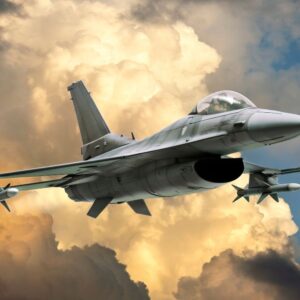
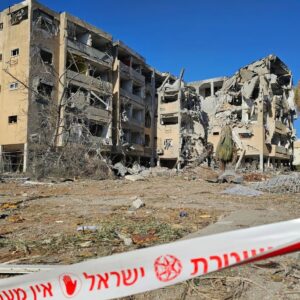
The consequences of the attack, as you know, we could divide into three levels: local, regional, and global. In the first, the operational effects of kinetic and non-kinetic actions—since there hasn’t been much in-depth discussion of the vital cyber attacks at the start of Operation Epic Fury (a name almost straight out of a Marvel movie)—are evident: the elimination of the nuclear program, the missile program including its industrial backbone, the Iranian navy, air force and air defense, arsenals of the Armed Forces, Revolutionary Guard, and militias, and of course its command and control infrastructure, etc., all to, among other things, break the levers of power of the Islamic regime.
In a second moment, and also at the local level, the exploitation of success after neutralizing the ayatollahs’ military capabilities could be—and some reports point to it—providing cover fire and logistical support to opponents of the regime, whether at the internal political level, all the opposition forming around the heir to the throne Reza Ciro Pahlavi, or at the ethnic level, since the Azeri and Kurdish minorities make up around 35-40% of the total population and have been repressed by the regime; the latter are very organized, plus they have the support of Kurds from other countries, who are militarily very organized, and who might seize the opportunity to, as is happening in Iraq and Syria, control part of the country’s territory, separating it from the capital’s control, and therefore making it evident that we are at the beginning of its end.
The regional consequences, among others, aren’t they evident or aren’t they perceived? Well, there is a non-reaction from the Sunni Gulf Monarchies (remember the Sunni-Shia Iranian confrontation) who are keeping an extremely low profile, only in defensive mode, just like NATO and the EU, but the entire International Community is trying to de-escalate the conflict and prevent it from spreading.
The complete opposite of what Iran did, which instead of attacking only its aggressors, attacked at least a dozen countries in an attempt to escalate and generalize the conflict, proof of the need to neutralize that country, or rather the theocratic regime governing it, whose aim has always been to destabilize the regional and world order.
Finally, in this first approach to the current conflict with Iran, which will surely force us to write about it again, there is also the global perspective, which apart from geopolitical effects of hard power (which for now seem unlikely to occur), there are effects on soft power, and specifically on the economy, since the rise in hydrocarbon prices, for example, has a contagion and cascading effect that, depending on how long the war lasts, could cause only a small correction in stock markets and prices if it’s short, but if it drags on, its repercussions could be much, much more harmful to our economy, as has happened in previous Black Swan events.
Thank goodness geopolitics is the art of deception, and it seems that the superpower China, Iran’s great ally, is the first one that wants the conflict to end quickly, given that it imports around 40% of its hydrocarbons from Iran. Who would have thought that Xi Jinping would end up saving us?