The scandal shaking Spain this week is not just about education: it is about truth, integrity, and the moral collapse of a government that preaches one thing and practices another. Spain’s Prime Minister, Pedro Sánchez—leader of the Spanish Socialist Workers’ Party (PSOE)—has been exposed by the newspaper El Mundo after it was revealed that he enrolled his daughter in a private Catholic university, precisely while his administration is pushing one of the most aggressive campaigns in Europe against private and religious education.
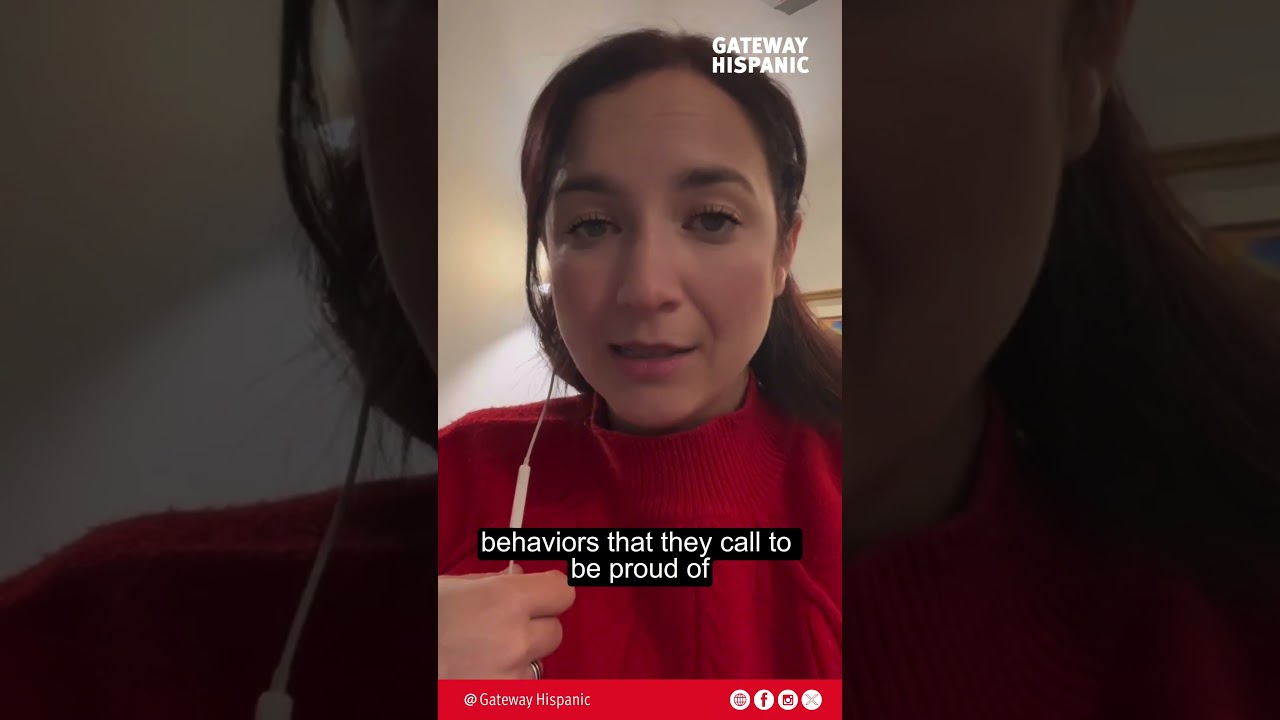
The revelation has sparked a political storm and reignited debate over the hypocrisy of Europe’s progressive elites. The topic was discussed in depth on the Sánchez Grass en América program, where attorney and political analyst María Herrera Mellado delivered a sharp critique of the Spanish leader’s double standards.
“It’s the same level of hypocrisy we saw from former Vice President Pablo Iglesias,” Herrera Mellado said. “He claimed that private education was for elites and bureaucrats and that only public education should be supported; yet he also sends his children to a private school. Pedro Sánchez is no different. He represents the classic pattern of socialism: one rule for the people and another for themselves.”
A credibility crisis
Herrera Mellado recalled that Sánchez is not only inconsistent but ideologically contradictory. “Let’s not forget,” she noted, “that he is the first Spanish president to publicly declare himself an atheist, and now he chooses a Catholic university for his daughter. This is not about faith or education; it’s about deception. Once again, we see the hypocrisy of the socialists.”
According to the analyst, such contradictions reflect a deeper moral crisis affecting not only Spain but much of Europe. “Spain is boiling right now,” she explained. “And not just Spain: France and other European nations are experiencing the same social and political collapse. There is growing insecurity, rising social tension, and a weakening of democracy, freedom, and prosperity. These self-proclaimed progressive governments are running out of excuses and cornering themselves.”
What Herrera Mellado described is part of a broader European pattern in which socialist and globalist leaders claim to fight for equality while enjoying the privileges they deny to others. In Sánchez’s case, this translates into a glaring paradox: his government demonizes private education as elitist, but when it comes to his own family, the choice is clear—private, prestigious, and religious.
A government that betrays its own principles
The PSOE, once a symbol of Spain’s democratic transition, has —according to its critics— become a party of contradictions and concessions. Herrera Mellado accused the current government of “surrendering to the separatists,” referring to political deals with Catalan and Basque independence parties in exchange for maintaining power.
“Pedro Sánchez has not said a single truth since he first ran as a candidate,” she said. “He lies day after day, and the Spanish people are tired of being manipulated. His appearance in the Senate today only confirmed what we already knew: that he is a man with no credibility, and that his word carries no weight—not in Spain nor in Europe.”
From Madrid to Brussels, Sánchez’s leadership is increasingly viewed as a warning: an example of how ideological arrogance and moral hypocrisy erode public trust. The segment on Sánchez Grass en América highlighted how this scandal reflects the deterioration of European political discourse, where leaders invoke social justice as a slogan but govern like elites disconnected from citizens’ realities.
The shadow of authoritarianism
Perhaps the most forceful part of Herrera Mellado’s analysis was her comparison of Sánchez’s staying power to that of Latin American strongmen. “It seems like nothing can bring him down,” she reflected. “And that reminds us of the control once held by the little dictators and tyrants of Hispanic America—leaders who, no matter how many lies they told or how much corruption was exposed, managed to remain in power through manipulation and control.”
The comparison is not exaggerated. Numerous analysts agree that Sánchez’s government has adopted an increasingly authoritarian tone, especially in its relationship with the judiciary, the media, and the opposition. By aligning with separatists and radical groups, it has weakened the institutions that safeguard democratic balance in Spain.
Meanwhile, his education policy—which penalizes private institutions and promotes ideological programs in public schools—is seen as part of an effort to reshape the country’s cultural identity under socialist dogmas. The fact that he chose a private university for his daughter reveals not only hypocrisy but also an implicit confession: even he does not trust the system he imposes on others.
A warning for the West
The Sánchez case delivers a lesson that transcends Spanish borders. It exposes the moral vacuum of modern socialism: a movement that preaches equality but feeds on privilege. Across Europe and the Americas, left-wing leaders have used the rhetoric of social justice to divide society, weaken institutions, and undermine national unity—all while shielding themselves from the consequences of their own policies.
As Herrera Mellado pointed out, the hypocrisy of Spain’s socialist government is part of a much broader crisis in the Western world—a crisis of leadership, coherence, and values. “The Spanish people are realizing that those who claim to represent them have been deceiving them for years. They speak of justice, but practice favoritism; they speak of transparency, but live behind closed doors.”
Conclusion: truth before ideology
Pedro Sánchez’s new scandal is more than a personal contradiction: it is a reflection of the moral and political decline of Europe’s left. His decision to send his daughter to a private Catholic university exposes the ethical bankruptcy of a government that preaches equality while protecting its own privileges.
Spain deserves better. The West deserves better. And as citizens lose faith in empty speeches and broken promises, the message becomes clear: leadership must be based on truth, not ideology.