Eating insects to survive? Brazil’s economic crisis and the cricket alternative.
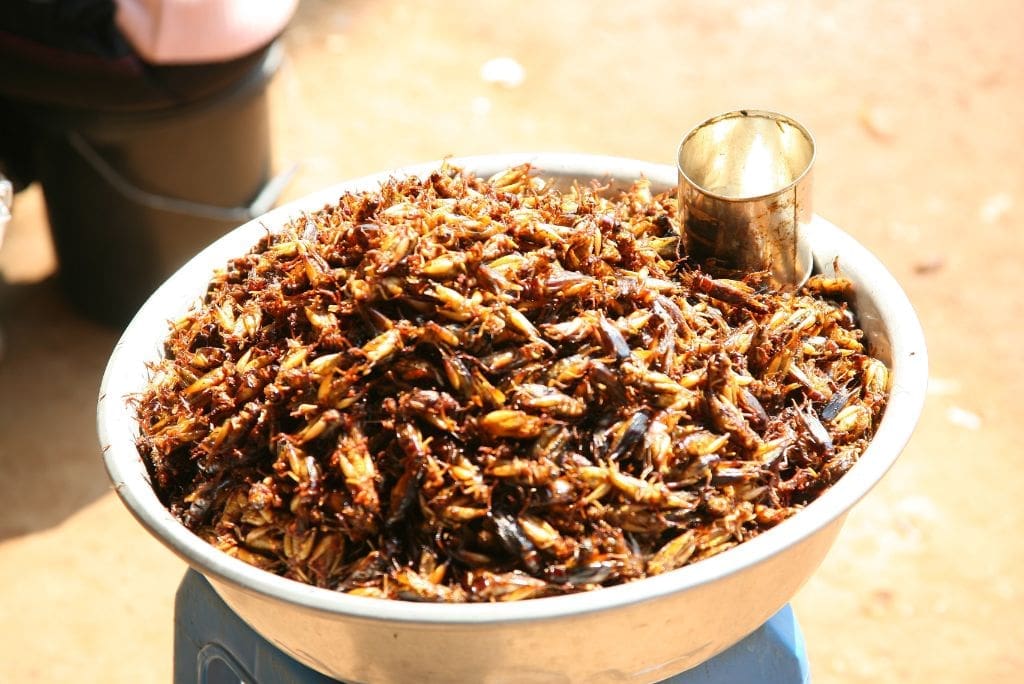
Food price inflation in Brazil has reached alarming levels in 2024, leading to unprecedented situations such as the recommendation to consume crickets as a food solution.
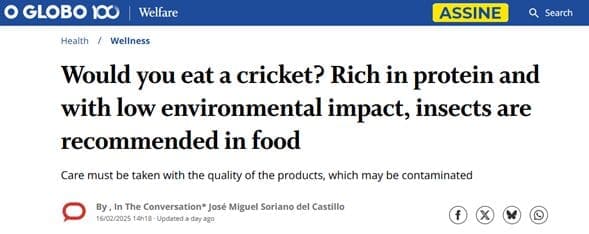
The newspaper O Globo, known for its leftist alignment with the government of Lula da Silva, recently published an article promoting cricket consumption as a viable and sustainable alternative. Yes! CRICKETS, you read that right.
This article emerges in a context where the prices of meat and eggs have skyrocketed, reflecting a complex economic situation under the current administration.
The cost of basic foods such as meat has risen by 20.4% during Lula’s second term, according to data from the Brazilian Institute of Geography and Statistics (IBGE).
This inflation not only surpasses the figures observed during the COVID-19 pandemic but has also significantly affected the population’s purchasing power.
The rise in egg prices has been particularly notable, with increases of up to 40% in some regions of the country, according to reports from the Brazilian Association of Supermarkets (Abras).
In this scenario, O Globo argues that crickets represent an alternative that is not only nutritional but also ecological, highlighting their low environmental impact and high protein content. How progressive and «environmentalist» they turned out to be, dehumanizing people.
Due to rising meat and egg prices in Brazil, the pro-government newspaper O Globo published an article promoting the benefits of eating crickets. According to the report, the insect can «offer sustainable and nutritious solutions» for the human body, fulfilling a desire of the vice president’s office.
The article states that crickets «are a viable alternative to conventional animal proteins» and reflect «the need for alternatives that balance environmental, nutritional, and economic considerations.»
Due to food price inflation in Brazil, even egg prices have increased, with hikes of up to 40% in various regions of the country. Data from the Brazilian Association of Supermarkets (Abras) confirm this trend.
The increase in meat prices, in turn, was greater than that observed during the COVID-19 pandemic. Throughout 2024, during the second term of the late «president» Lula da Silva, the average price of protein increased by 20.4%, according to records from the Brazilian Institute of Geography and Statistics (IBGE).
The publication also highlights that the edible insect sector has experienced rapid growth in recent years. The market for this industry is estimated to be worth more than $9 billion by 2029. Currently, more than 400 companies in Europe and the United States are leading this type of business. Additionally, countries like Australia are emerging as key players in production.
Mexico, on the other hand, has 549 recognized edible insect species. The country plays a prominent role in Latin America, and sources close to the government suggest that this may be an attempt to boost trade in the region.
However, this proposal may be seen as a sign of desperation in the face of the current government’s inability to control inflation and properly manage the economy.
The idea that insects can be a «sustainable and nutritious solution» is promoted as a response to economic and environmental pressures, although this could also be interpreted as a way to divert attention from the real causes of inflation.
Globally, the edible insect market has been presented as a booming industry, with projections suggesting it could reach a value of more than $9 billion by 2029. However, these figures may be optimistic or inflated, considering that cultural and regulatory acceptance varies greatly between countries.
In Europe and the United States, more than 400 companies have attempted to position themselves as leaders in this emerging sector, although the viability of many of these businesses remains questionable.
Australia, for its part, has promoted itself as a key player in the production of insects for human consumption, but this does not necessarily translate into widespread adoption or consumer acceptance.
This supposed growth may rather reflect a passing trend or an imposition of progressive agendas rather than a true transformation in protein sources, as sustainability and the reduction of resource use have yet to be demonstrated on a large-scale practical and economic level.
The lack of meat in the human diet can have several health implications. Some potential effects include:
- Deficiency of High-Quality Proteins: Meat is an excellent source of complete proteins, meaning it contains all essential amino acids in the necessary proportions for the human body. Without meat, if other adequate protein sources are not consumed, there could be a decrease in amino acid intake, affecting muscle growth, tissue repair, and the maintenance of biological systems.
- Lack of Heme Iron: Iron exists in two forms: heme, which is more efficiently absorbed and mainly found in meat products, and non-heme, whose primary sources are plants but is less efficiently absorbed. The absence of meat could lead to iron deficiency, especially in women of childbearing age, children, and adolescents, increasing the risk of anemia.
- Decrease in Vitamin B12: Vitamin B12 is crucial for neurological function, DNA production, and red blood cell formation. It is found almost exclusively in animal sources, including meat. Without supplementation or consumption of fortified foods, the lack of meat can result in B12 deficiency, leading to anemia, fatigue, weakness, and long-term neurological problems.
- Reduction of Zinc and Selenium: Meat is one of the best sources of zinc and selenium, essential minerals for the immune system, DNA synthesis, reproduction, and protection against oxidative damage. Although these minerals are also found in plant-based foods, their bioavailability is usually lower, which could increase the risk of deficiencies.
- Impact on Bone Health: Meat contributes to the intake of phosphorus and other nutrients necessary for bone health.
- Possible Increased Risk of Diseases Due to Nutritional Deficiencies: The exclusion of meat could lead to a less varied diet or one insufficient in certain nutrients, potentially increasing the risk of various diseases related to nutritional deficiencies, such as rickets due to lack of vitamin D (if sun exposure is insufficient and there are no other sources), among others.
In conclusion, the recommendation to consume insects as a solution to food price inflation in Brazil under Lula’s government not only reflects a lack of vision in addressing the country’s real economic problems but also negligence toward the nutritional well-being of its citizens.
Suggesting crickets as a direct alternative to highly nutritious foods like meat and eggs is, at best, a temporary fix that ignores the long-term needs of a population that deserves access to a balanced and healthy diet.
Introducing insects into the daily diet of Brazilians could lead to deficiencies affecting public health. Meat and eggs are not only high-quality protein sources but also provide essential vitamins and minerals that insects do not.
Heme iron, vitamin B12, and other critical micronutrients could become scarce, leading to consequences such as anemia, neurological problems, and a weakened immune system, especially in vulnerable groups such as children, the elderly, and pregnant women.
This approach by Lula’s leftist government, instead of seeking sustainable economic solutions that allow citizens to access a diverse and complete diet, seems more like a maneuver to divert attention from its inability to properly manage the economy.
The true responsibility of a government should be to ensure that its citizens not only have food on the table but that it is nutritious, varied, and sufficient for healthy development and a dignified life.
Instead of promoting insects as a simplistic and potentially harmful health solution, policies should be implemented to support local agriculture, encourage the sustainable production of animal proteins, and improve economic infrastructure to reduce costs and increase the availability of healthy foods.
Only then can Brazil move toward economic and nutritional well-being without compromising the health of its citizens in the name of false sustainability.
About The Author