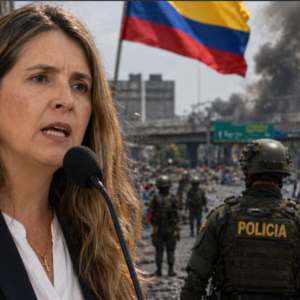
Petro questions the anti-drug strategy after the U.S. attack in Venezuela and points to the ELN while cocaine continues reaching Europe through unmonitored routes

© Saku_rata160520 / Shutterstock
Colombian President Gustavo Petro reacted harshly to the recent U.S. attack on a facility in Venezuelan territory that, according to him, was linked to the National Liberation Army (ELN).
In a lengthy message posted on social media, the president once again laid out his vision of regional drug policy—a vision that blends accusations, claims lacking independent verification, and a persistent shifting of responsibility onto external actors.
Petro argued that many recent military operations have targeted the “wrong objectives” and maintained that the fight against drug trafficking must be based on “precise intelligence and effective coordination,” rather than isolated actions.
However, the president omitted a key fact: under his administration, Colombia has experienced a sustained expansion of coca cultivation and a territorial strengthening of illegal armed groups, according to reports from international organizations and Colombia’s own security agencies.
In his message, Petro stated verbatim:
“Many speedboats attacked with missiles were not carrying cocaine but cannabis. Paradox: in the United States it is legal in many places.”
With this argument, the president attempts to downplay counternarcotics operations and shift blame to what he calls the U.S. “double standard.”
Yet this framing ignores a basic reality: in Colombia, both cocaine and illegal cannabis continue to finance criminal structures responsible for homicides, forced displacement, and extortion—regardless of their legal status in other countries.
Petro went even further by blaming the Colombian Congress for the illegality of cannabis, claiming that a vote lost “by one vote” has cost the lives of “many humble boat operators,” while “not affecting a single U.S. or global consumer.”
This assertion not only lacks empirical support but also diverts attention from the fact that drug trafficking remains one of the country’s main sources of violence.
Regarding drug trafficking routes, the president was categorical:
“Cocaine to Europe goes by submarines and containers. Cannabis is what is being illegally attacked.”
While it is true that organized crime has increasingly sophisticated its methods—a fact acknowledged by international law enforcement agencies—this does not absolve the Colombian state of responsibility. On the contrary, it underscores how current policies have failed to curb the illicit trade.
On the ELN, Petro once again adopted a contradictory narrative. He stated:
“The ELN in Catatumbo, and the 33rd Front, must decide whether they compete for cocaine or for peace.”
At the same time, he acknowledged their territorial control and central role in cross-border drug trafficking. In practice, negotiations without concrete results and poorly designed ceasefires have allowed the ELN to consolidate itself as a transnational actor, even operating from Venezuelan soil.
The president also claimed:
“We know that Trump bombed a factory in Maracaibo; we believe they mix coca paste there to make cocaine. It is simply the ELN.”
Even so, Petro insisted on absolving Nicolás Maduro’s regime of any direct responsibility, stating that “in Colombia there is no evidence that Maduro is involved in drug trafficking.” This position contrasts sharply with multiple investigations and international sanctions that have documented the Venezuelan regime’s tolerance—if not outright collaboration—with criminal networks and armed groups.
In a clearly defensive tone, Petro further asserted:
“Trump has been made to believe that I am a front man for Maduro… What a mistake by the U.S. government.”
He added that neither he nor his family own assets abroad, even citing The New York Times to claim there is no evidence against him. This personal emphasis reinforces the perception that the president prefers to portray himself as a victim of international conspiracies rather than account for the results of his domestic governance.
Petro concluded by reiterating his commitment to crop substitution, stating that “today cannabis and illegal gold are more profitable than cocaine” and that the state must “seize the opportunity.”
However, substitution policies without effective territorial control or real state authority have repeatedly failed in Colombia, leaving entire communities at the mercy of armed groups.
The debate reopened by these statements is legitimate and transcends borders. But while the president continues to blame the United States, Europe, Congress, foreign intelligence services, and previous governments, the facts are stark: Colombia is less secure today, drug trafficking has diversified, and illegal groups have greater operational capacity than at the start of his term.
More than lengthy speeches and external accusations, the country needs results. And so far, Gustavo Petro’s security policy has produced exactly the opposite of what it promised.
READ MORE:
About The Author