Epic Fury Operation Reopens Debate on Europe’s Geopolitical Weakness as War with Iran Advances
 Jesus de Salvador y Cerdan
ID del elemento: 2460648719
As the war with Iran unfolds, European economies are trembling and hoping the conflict will end quickly. Yet in Europe, the launch of Epic Fury Operation has revived an old debate: why the European Union continues to struggle as a serious geopolitical actor.
At times, it seems as if no one is steering the EU’s ship. At other times, it appears that thirty different drivers are trying to steer it simultaneously. The result is often a mix of short-term thinking, limited geopolitical awareness, and—at times—questionable political motives.
A War Likely to Last
The current conflict is unfolding largely as expected. The earlier confrontation in June 2025—known as Rising Lion Operation—had more limited objectives and lasted only twelve days. Because Epic Fury has far broader goals, it is reasonable to assume the campaign will last longer.
As the Prussian strategist Carl von Clausewitz famously observed, no military plan survives first contact with the enemy without changes. What is more troubling is how speculation and political rhetoric sometimes amplify public fears for economic or political advantage. One only needs to listen to certain business associations—such as groups representing gas station owners—to hear these concerns expressed quite openly.
The First Phase: Air Superiority
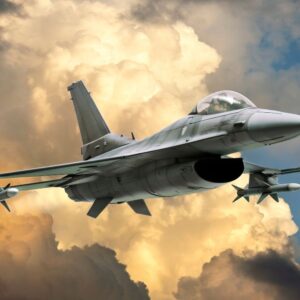
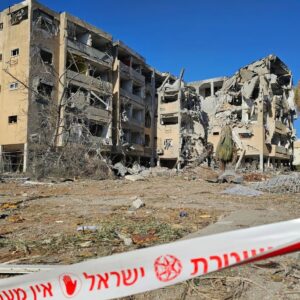
During the first two weeks of the operation, the American-Israeli coalition achieved air superiority and effective control of Iranian airspace. Since then, efforts have focused on systematically dismantling Iran’s nuclear program and destroying its missile and drone capabilities, including the industrial infrastructure that supports them.
Despite these efforts, Iran still retains meaningful military capacity. Some analysts estimate that roughly 30 percent of its missile capability remains operational. This is still significant enough to threaten coalition objectives, although these capabilities are expected to diminish over time.
Another notable development is the targeting of senior political and military figures. Several leaders and commanders have been killed, suggesting that the once-taboo practice of targeting national leadership during wartime may be entering a new phase.
Iran’s Adaptation Strategy
These strikes have forced Iran’s leadership structure to adapt. Whether out of necessity or prior planning, the regime appears to have shifted toward a more decentralized command system designed to ensure survival.
Historically, similar systems have existed elsewhere. Spain once organized territorial defense through regional military commands called Captaincies General, each designed to operate independently with its own infantry, artillery, engineers, logistics, and other units. Such decentralization allowed local commands to continue fighting even if central leadership was disrupted.
Iran appears to be employing a comparable logic. Even after significant losses, the country still has reserves that allow it to remain a threat for some time.
A War of Endurance
Many analysts believe the strategy of the Ayatollahs’ regime is straightforward: endure and buy time.
This means prolonging the conflict while exploiting political divisions and economic vulnerabilities among its opponents—particularly the United States and Israel, as well as the broader Western alliance.
For Iran’s ruling regime, this is an existential war with no clear limits. For Israel, the stakes are also extremely high, especially after the attacks of October 7, 2023. Israel appears prepared to continue fighting until it believes the threat has been eliminated.
For the United States, however, the conflict remains a limited war driven primarily by strategic interests—though very significant ones. One key objective is preventing any hostile power from dominating the Middle East.
Europe’s Strategic Weakness
Against this backdrop, Europe’s weaknesses become increasingly visible.
These weaknesses are not only military—such as limited deployable forces—but also political. Despite decades of rhetoric about global influence, the European Union often appears unable to act decisively during major crises.
The EU’s vision of geopolitical independence—central to the Common Foreign and Security Policy created by the Maastricht Treaty—has largely remained an aspiration rather than a reality.
In practice, European responses to the conflict have been fragmented. Some countries openly supported the United States, while others criticized the intervention against Iran while still participating indirectly or benefiting economically from the resulting inflation and higher tax revenues.
Divisions Within Europe
Political disagreements have been even more pronounced.
Germany and France—later joined by Italy—effectively formed a leadership group with the United Kingdom, sidelining other important EU members such as Poland, the Netherlands, and Spain.
Public debate intensified after controversial remarks by Ursula von der Leyen suggesting that the world currently lacks a functioning international order. Her comments prompted strong reactions from several European governments, forcing her to later clarify her position.
Some European leaders argued that Europe must defend international law regardless of the circumstances—even if it means confronting major powers. Critics, however, see this position as overly idealistic.
The Limits of International Law
In reality, defending the so-called international legal order against all major powers would be extremely difficult.
The United States, China, and Russia all hold veto power in the United Nations Security Council. This authority allows them to block enforcement of international law when it conflicts with their interests.
As a result, international law sometimes functions more like a moral framework than a truly enforceable legal system. Its application ultimately depends on political decisions rather than consistent legal mechanisms.
A New Strategic Reality
The latest development further illustrates Europe’s marginal role in global geopolitics.
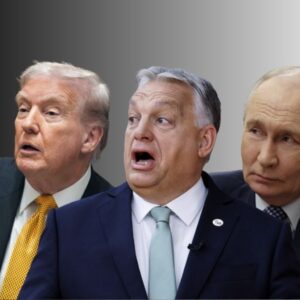
Following the closure of the Strait of Hormuz, Donald J. Trump lifted sanctions on Russian oil in an effort to stabilize global energy markets and prevent a severe economic crisis.
This move echoes the famous observation by Lord Palmerston: nations have no permanent allies or enemies—only permanent interests.
Adaptation or Decline
Whether Europe should defend what many call the old international order or adapt to new geopolitical realities is an open question.
But history offers a clear lesson. In both nature and human societies, those who fail to adapt eventually disappear.
For the sake of Europeans—and for our partners across the Atlantic—one can only hope that adaptation comes before decline.
Traducción y adaptación del articulo publicado en Gateway Hispanic